
Why do so many people find silence uncomfortable?
Why does being alone with our own thoughts feel more difficult today than it used to?
One study famously showed that many people would rather experience something unpleasant than sit alone with their thoughts. In this experiment, participants were asked to spend just 6–15 minutes in a room with no distractions—no phone, no music, nothing to do but think. Surprisingly, a significant number of them chose to press a button that delivered a mild electric shock rather than stay in silence with their minds. This raises an important question: What is happening in our minds during quiet moments that feels so unbearable? Silence doesn’t feel neutral anymore—it feels like a space we need to escape. In short, silence feels uncomfortable.

This discomfort with quiet doesn’t automatically mean loneliness, but the two can be connected. When we constantly avoid being alone with ourselves, we lose the chance to notice what we’re feeling or what we truly need. That lack of inner attention doesn’t instantly turn into loneliness, but it can create subtle emotional emptiness. Still, silence-anxiety and loneliness are not identical; they simply share a similar root: our unfamiliarity with our inner world.
And this is where modern life becomes even more interesting. Even in noisy environments—like subways, crowded streets, or busy cafés—people instinctively reach for their earphones. They’re surrounded by sound, background noise, yet they add another layer of sound on top of it. At first glance, it looks contradictory: why add more noise to noise? But maybe it isn’t about escaping sound. Maybe it’s about controlling it.
When the world feels too chaotic, unpredictable, or overwhelming, curated sound becomes a protective shell. And this also explains why noise-canceling headphones have become so popular: people aren’t only trying to block out the external world—they’re trying to create a small pocket of inner stability, a space where their own thoughts can feel less threatened.
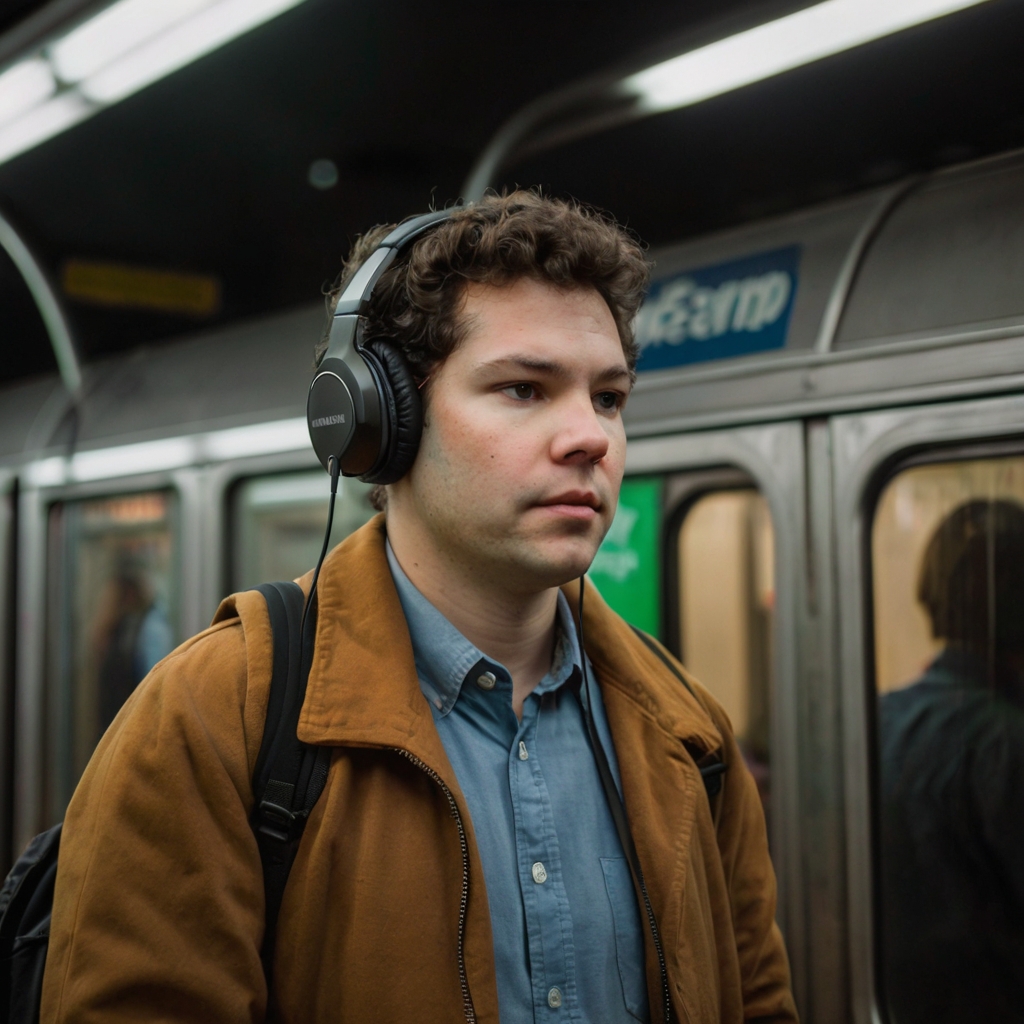
This is also why background sound becomes so appealing. Many people turn on music, TV, or YouTube not because they want entertainment, but because noise offers a sense of companionship. It fills the room just enough so they don’t have to face the full weight of quiet. And honestly, if it works for you, there’s nothing wrong with that. I sometimes do the same. When I read or study, I play instrumental music in the background. With soft sound around me, my attention settles; time passes more gently; my thoughts feel less scattered. The music doesn’t pull me away from myself—if anything, it supports me while I stay with my thoughts.
So using music or ambient sound isn’t a failure to be mindful presence. It can be a bridge. A gentle rhythm that keeps you company as you practice being present. A structure that makes the quiet feel a little less sharp. What matters isn’t perfect silence—it’s the intention behind how we choose sound. Instead of using noise to escape ourselves, we can let it help us stay with ourselves.