Did you know that knitting can boost brain health, offering benefits similar to meditation?
When people think of knitting, they often imagine it as an old-fashioned pastime—something reserved for winter evenings or older generations. But knitting has been quietly transforming in recent years. More people, including younger generations and even men, are discovering that knitting is not only creative and practical but also profoundly meditative. Some call it hand meditation—a mindful practice that soothes the mind while engaging the body.
My First Encounter with Knitting
I first encountered knitting through a volunteer project with Save the Children. In some regions of Africa, newborns face harsh temperature changes at night, and hand-knitted hats can make the difference between life and death. Volunteers were encouraged to knit these hats, and that’s when I picked up my needles for the first time.
What began as an act of service soon became personal. I started with knitting needles, later explored crochet hooks, and even joined online classes to make socks, wallets, and small bags. At first, I thought knitting was only useful in winter. But gradually, I realized it could be part of everyday life, producing items both functional and full of meaning.
Why Knitting is Called “Hand Meditation”
Knitting is often described as a form of meditation you can touch. But why?
- Repetition as rhythm: Each stitch is a quiet anchor to the present moment. Just like following your breath in meditation, the repetitive motion of knitting helps still the mind.
- Focus over distraction: Unlike scrolling on a phone, knitting requires steady concentration. The yarn keeps your hands busy and your brain engaged in one flow of attention.
- Slowness in a fast world: In a culture obsessed with instant gratification, knitting invites slowness. It takes time, patience, and presence—and this is precisely its gift.
Knitting resists the fragmented pace of modern life. Instead of scattering attention across apps and notifications, it helps us return to ourselves.
What Science Says About Knitting and the Brain
Knitting is not just relaxing; it has measurable effects on the brain and mental health.
- An international study on crochet found that participants reported feeling calmer (89%), happier (82%), and more useful (74.7%) after engaging in the craft (PubMed study).
- National Geographic highlighted how knitting activates the brain’s reward network differently than social media does. Instead of short dopamine spikes, knitting strengthens steady neural pathways that improve focus, mood, and resilience (National Geographic).
- Programs like Mindfulness through Knitting show that the practice can lower stress hormones, slow heart rate, and help people manage intrusive thoughts (National Health Corps).
Together, these findings confirm what knitters have always known: every stitch is not just creative—it’s restorative.
Beyond Relaxation: The Hidden Benefits
For me, knitting is more than relaxation. It’s a way to:
- Relieve stress: Like a stress ball, the repetitive hand motion releases tension.
- Enhance concentration: I often knit while listening to podcasts or documentaries. The rhythm of knitting helps me absorb and remember more.
- Protect from digital distraction: On public transport, I choose yarn over endless scrolling. Instead of losing an hour on social media, I create something real.
- Feel achievement and attachment: Each handmade item, imperfect as it may be, carries personal meaning. It’s not just an object; it’s a reflection of time and care.
A Lesson in Patience and Life
Knitting also offers unexpected life lessons. When I rushed or tried to knit while distracted, I made mistakes—dropped stitches, wrong counts, tangled yarn. Sometimes, I had to unravel hours of work. It reminded me of life itself: the outcome depends on how we build our days, one choice at a time.
Each row of stitches is like a day. Alone, it seems small, but together they create something lasting. The process teaches patience, resilience, and the value of steady progress.
A Growing Movement: Not Just for Women or Winter
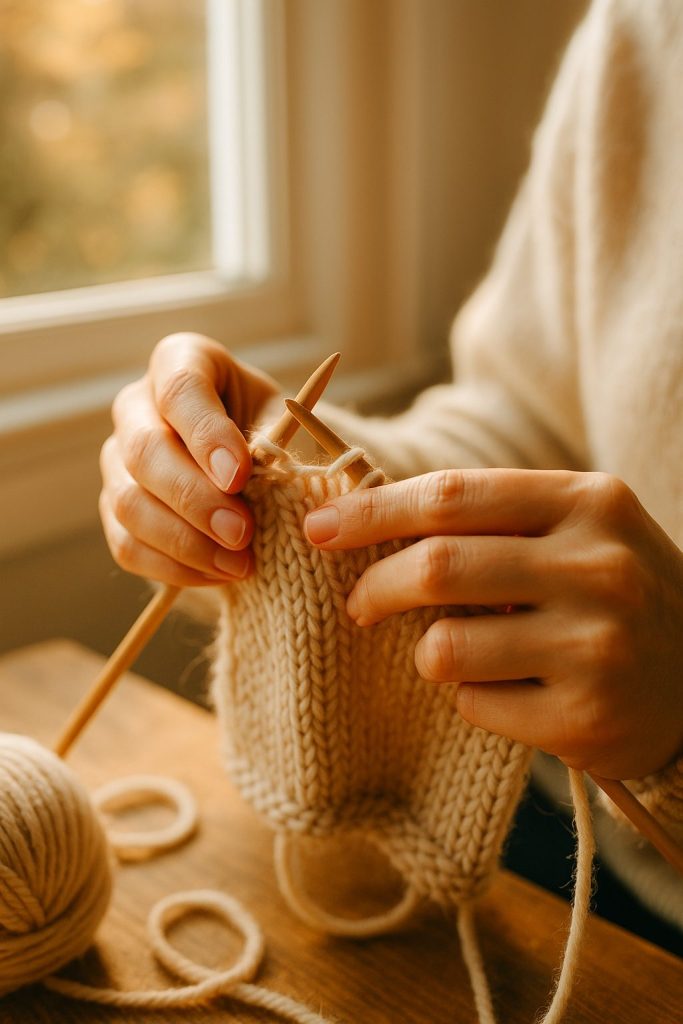
Knitting is no longer confined to older women or seasonal hobbies. In fact, younger generations and men are embracing it too. The Guardian even reported on “a new generation of male knitters” who see it as both creative and therapeutic (The Guardian). This shift shows that knitting is being recognized for its universal benefits: mindfulness, mental health, and creative expression.
Why You Should Try Knitting
You don’t need to wait until retirement to try knitting. Free classes are available in libraries and communities, and countless tutorials exist on YouTube. Yarn and a single hook are enough to start.
Knitting offers more than scarves or socks. It offers stillness in a noisy world, a practice of patience in an impatient culture, and a way to reconnect with both creativity and mindfulness.
If you’re searching for a simple life practice that nurtures your brain, reduces stress, and builds presence one stitch at a time, knitting may be exactly the meditation you didn’t know you needed.
Knitting for Beginners: How to Start Without Feeling Overwhelmed
The Best Yarns and Tools for Mindful Knitting: A Beginner’s Guide
Knitting in Public: How Commuting Can Boost Mindfulness and Creativity