

3 factor to careing for Children’s Meditation Training.
Last time I posted about the importance of children’s meditation. I talked about why it is needed for children, and when is the right age to start meditation training. How to form the meditation habit. It sounds really right and great to make these habits, but it is not easy to let children stay in a certain posture for a while.
Today in this post I want to explain more about the method of meditation training for children.
Three factors for children’s meditation training
There was a children’s meditation experiment in 2016 at an Italian primary school. When they practice meditation with children, they are focused on three things: ‘mindfulness of breathing’, ‘mindfulness of body parts’, and ‘mindfulness of thoughts’. Since children can’t concentrate for a long time and by the time the training time is longer, they easily lose interest. By conducting this meditation training with these three factors, children could focus on the meditation at the end of the period, and their meditation time became longer.
1. Mindfulness of Breathing
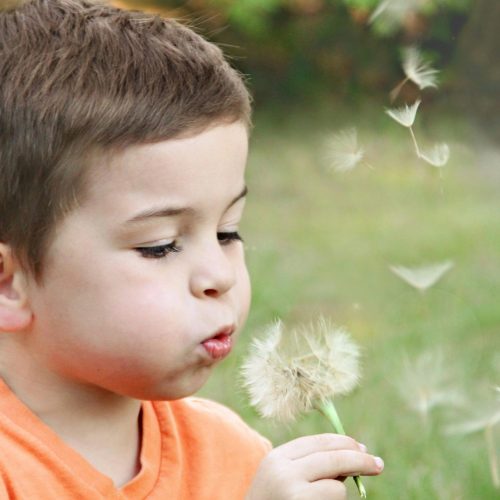
Every human being knows how to breathe naturally, but ironically, this is one of the important factors in meditation training. It is because by inhaling and exhaling you can focus on you and it brings you calm down. So, breathing is the gate of mediation. Although it is an important process for meditation, at the same time it makes children feel bored since these are natural things and tedious stuff.
In the research, they used various tools to let them feel fun. For example, put a small object such as a pen or pencil on the belly. It makes children pay attention to their bellies. When they inhale their breath, their stomachs are bulging. Another way is to put their hand on their stomach and feel the movement of the stomach or put my hand on a classmate’s belly to feel it. Checking their stomachs lets children to interested in and have meditation habits. Other fun method is let children think the meaning of in and out when they breathe. Then they will more focus circulate of air in and out through the nose.
Another method is using children’s imagination. When the trainer guides the children that there is a dwarf near the nostril and makes them think about how this man will move when the children breathe. These instructions make them to feel fun in tedious meditation training
2. mindfulness of body parts
Once children warm up with statics breathing training, the next step is dynamic training with the body. In this chapter, make children pay attention to their bodies. Using the body, also makes children feel fun in meditation training.
In the research, they used an interesting method. it is called ‘Raisins meditation’ Give several raisins to children’s hands and then let them smell, watch, and touch it. Lastly, let them eat and taste it. This meditation stimulates the four senses (sight, taste, touch, smell). Another method is touching other classmate’s hands and feeling of skin, nails and temperature of hands. Furthermore touching the different parts of the face.
By touching body parts, it stimulate children brain.
There is more dynamic meditation training method. Let children walk slowly and try to feel how every part of the body part is working, such as when they step the foot on the floor, which part of the footstep first, and which muscle is used.
Made children run or jump for a short time and then let them focus on their heartbeat or panting sounds. But this training should be done end of the training, if not they keep wanting to jump and run which is hard to control.
3. mindfulness of thoughts
As you know children have a great imagination, and by using this children can enjoy meditation training. In the experiment, they used these methods. Let children imagine they were clouds in the sky and then, write their main thoughts on paper such as what they are in their minds, or come up with something by looking at the cloud. Once it is done, make children represent their feelings using their bodies. It can be the movement of clouds by crawling or walking.
Another method is, to try to feel their emotion or main thoughts of the moment. Also, try to think about how this feeling or thing comes from and how it disappears.
Or look at family, friends, and classmates’ eyes and try to understand what they think and then, try to transmit wishes (peace, happiness, health) mentally.
Another is, to imagine they are the animals and strolling in the forest. The children will draw animal postures and try to behave like animals. Another imagination is, lying down on the floor and making them imagine they were a paper-facing scan in the copy machine. Then children will represent it by rolling their bodies on the floor.
In particular, by encouraging children to imagine, they can strengthen their imagination.
In Short
I believe these three factors(mindfulness of breathing, mindfulness of body parts, and mindfulness of thoughts) will help children to train in meditation fun. You don’t need to try every three factors, depending on your situation, you can choose some factors. The important thing is, to make children feel fun in meditation training by using your games and imagination to get used to meditation.
Although these are good methods to apply to children, if your children start first, then try under 10 minutes first. After that, you can extend the 2~3 minutes per day. About 1 month later, children can focus on meditation for more than 30 minutes.
Doing it often for a short time is more effective in making habits than doing it sometimes for a long time. For example, doing 10 minutes 3 times a week is better than 30 minutes of meditation once a week.
Read More
Companies Encourage employee Meditation For Well-being
Meditation to help improve the brain
What is Meditation and Mindfulness?
reference from

© 2024 www.meditationinspirer.com All Rights Reserved. About & Disclosures
We are a participant in the Amazon Services LLC Associates Program, an affiliate advertising program designed to provide a means for us to earn fees by linking to Amazon.com and affiliated sites.