But here’s the catch: knitting, especially in tight or awkward spaces, can sneakily turn into a source of tension. I started noticing that after a few rides, my shoulders felt tight, my wrists ached slightly, and my fingers were stiffer than usual. It’s ironic, isn’t it? You pick up knitting to relax, yet you end up feeling sore if you’re not paying attention to your body.

Knitting on the subway has become one of my favorite small rituals lately. It turns otherwise wasted commuting time into something calming, creative, and mindful. Instead of scrolling endlessly on my phone, I find myself counting stitches, watching the yarn flow between my fingers, and letting my mind settle into a quiet rhythm. In those moments, even the rumble of the train feels like background music to a meditative practice.
That’s when I realized mindfulness in knitting isn’t only about the flow of yarn—it’s also about body awareness. The way we sit, breathe, and hold our tools matters just as much as the pattern we’re following.
If you enjoy knitting on the go, here are a few gentle reminders to make your experience both creative and comfortable:
1. Relax your shoulders.
While seated, try leaning back against the chair or subway seat and consciously let your shoulders drop away from your ears. Most of us unconsciously hunch forward, especially when focused on small tasks. By letting your shoulders fall naturally, you prevent upper-body tension before it builds up.
2. Keep your elbows close to your body.
Holding your arms up for long periods can strain your shoulders and neck. Instead, let your elbows rest lightly near your sides. You’ll notice that your movements become smaller, smoother, and less tiring over time.
3. Loosen your grip.
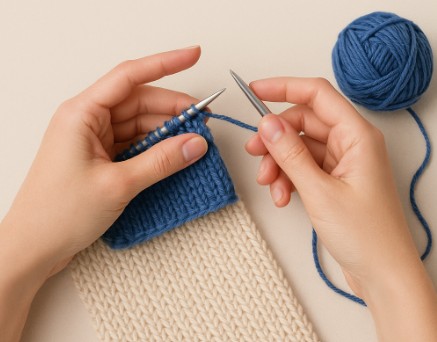
It’s easy to clutch your needles or yarn too tightly when you’re concentrating or working on a tricky row. If you feel your fingers tightening, take a slow breath, pause, and consciously loosen your hold. A relaxed grip not only helps prevent stiffness but also gives your stitches a softer, more even texture.
4. Take micro-breaks.
Every few stops or rows, set your needles down, roll your wrists, and gently stretch your fingers. These small pauses help release tension and bring your focus back to the present moment—exactly what mindfulness is about.
5. Choose lighter tools.
If you’re knitting on the move, consider shorter circular needles or lightweight yarns. They’re easier to manage in tight spaces and reduce strain on your hands.
Knitting is more than a hobby—it’s a moving meditation, a conversation between your hands and your mind. When you practice awareness through posture and breath, you transform a daily commute into an act of gentle self-care. After all, mindfulness isn’t about adding another task to your day; it’s about bringing calm intention to the ones you already have.
So next time you pull out your knitting needles on the train, remember: relax, breathe, and let the rhythm of your stitches match the heartbeat of the city around you.