Why Self-Identity and Personal Goals Are Essential for Focus

Why We Get Easily Swayed

It is easy to say that we should not be influenced by others, but in practice it is often very difficult. Many of us know the feeling of hearing someone’s judgment or criticism and then replaying those words endlessly in our minds. Instead of letting the comment pass, we chew on it, magnify it, and allow it to pull us away from what we need to focus on.

The real issue is not that other people speak—we cannot control that. The problem is how we respond. If our self-identity is not strong, then someone else’s words can easily shake us. Without a clear sense of who we are, we lack the foundation to remain steady. Research in psychology shows that a strong sense of identity is closely tied to resilience, well-being, and the ability to focus (Frontiers in Psychology).

The Cost of Listening Too Closely

A book I recently read, Linchpin by Seth Godin, highlighted this idea in a memorable way:
“You can’t make a useful map when you are busy exaggerating the downside of every opinion.”

This line struck me deeply. If we spend too much time giving weight to what others say—especially their criticism—we lose the opportunity to create our own map. Instead of following our personal goals, we end up following someone else’s directions.

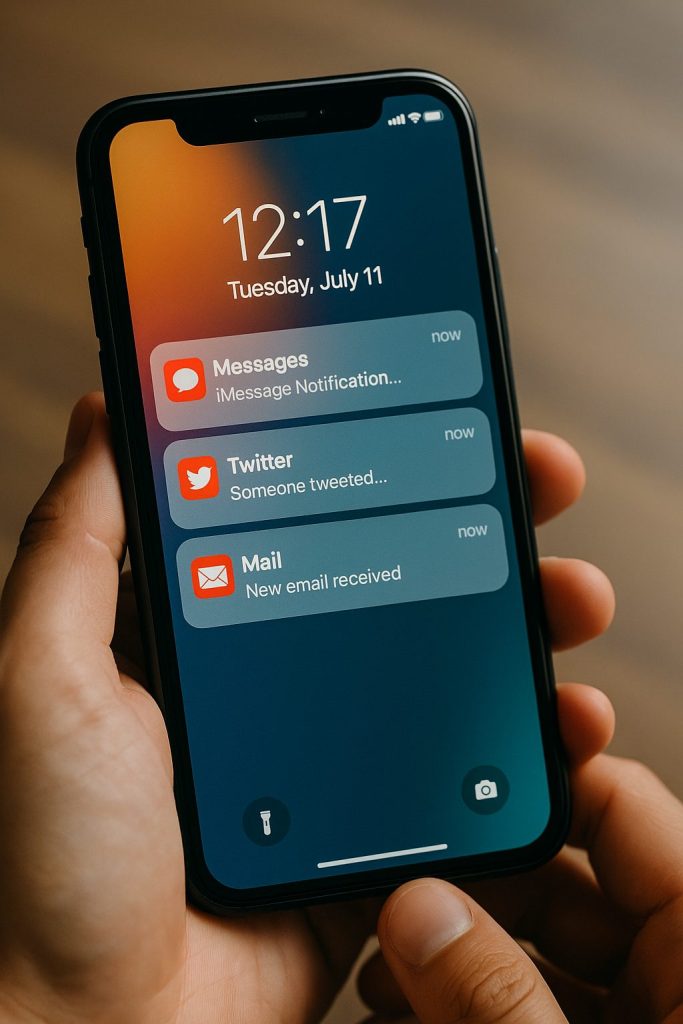
It also made me think about how often we are surrounded by external distractions. Phones buzzing beside us, notifications on an Apple Watch, and casual workplace conversations can all pull our attention away. Studies even suggest that our attention span has dropped dramatically in the digital age, partly because of constant notifications and multitasking (Time). If we don’t have clear personal goals, these distractions end up dictating how we spend our time.
Goal

Why Self-Identity and Goals Create Focus

Self-identity is the anchor that allows us to resist outside noise. When we know who we are, what we value, and what we want, other people’s words lose much of their power. Instead of being defined by others, we define ourselves.

Personal goals add direction to that identity. Goals give us a sense of purpose and tell us where to place our energy. When self-identity and personal goals work together, focus becomes natural. We are no longer swayed by every passing comment because we know where we are headed.

Think about how many times we hear advice such as “Time is money” or “Don’t waste your life.” These sayings are true, but they only resonate if we know what we want to do with our time. Without clear goals, these wise words remain abstract. We may nod in agreement, but in reality, we still waste hours scrolling through our phones or getting caught up in meaningless chatter.

A Personal Reflection

I noticed this pattern in my own life. I would read motivational quotes about discipline and focus, yet still catch myself drifting into distractions. I understood the advice, but it didn’t change my behavior.

The turning point came when I began to clarify my personal goals and reflect on my self-identity. I asked myself questions like: Who am I? What do I want to create during this limited time? The answers didn’t come overnight, but they gave me something solid to stand on.

With stronger self-identity, it became easier to notice when I was losing focus and to gently bring myself back. With clear goals, I felt more motivated to protect my time. Distractions still appear, but they no longer control me.

Practical Steps to Strengthen Focus

focus
  1. Clarify your self-identity. Write down your values, strengths, and passions. The more you know yourself, the harder it is to be shaken by others.
  2. Set personal goals. Define specific short- and long-term goals. These give direction and make focus easier.
  3. Reduce external noise. Silence unnecessary notifications, limit distracting apps, and create an environment that supports focus.
  4. Reflect regularly. Take time each week to check if your actions align with your goals. Adjust where necessary.
  5. Celebrate small wins. Acknowledge progress, no matter how small. This builds confidence and reinforces your identity.

Conclusion: Living by Your Own Map

Life is full of external noise—comments from others, digital notifications, and endless information. But clarity comes when we know who we are and what we want. Self-identity provides the foundation, personal goals offer direction, and focus becomes the bridge between the two.

The key is not to eliminate every distraction but to strengthen ourselves so that distractions lose their grip. Ask yourself: Am I living by my own map, or by someone else’s directions?

When you choose your own map, you take ownership of your time, your energy, and your happiness. And that is the power of building self-identity, setting personal goals, and practicing focus.


Why Comparison Steals Happiness (and How to Build Confidence Instead)

Happiness

Why Comparison Makes Us Unhappy

Why are so many people unhappy, even when their lives appear fine on the surface? One of the biggest reasons is the habit of constantly measuring ourselves against others. As social beings, we naturally live in communities, and whenever we interact with people, this tendency sneaks in. Whether it’s about career, lifestyle, looks, or relationships, we often evaluate our worth by looking at those around us.

The issue is not simply noticing differences, but the emotions that follow. Instead of motivating us, this habit often brings jealousy, frustration, or a painful drop in self-esteem. Research has shown that people who spend more time engaging in social comparisons on platforms like Facebook tend to feel less happy overall, even when they know most posts only show the highlights of life (Cyberpsychology Study).

stop Comparing Yourself

The Trap of Comparison

Constantly measuring ourselves against others can quietly erode self-confidence. When we see someone else’s progress and feel left behind, our self-esteem begins to drop. That drop can quickly turn into jealousy, which then feeds negative thoughts: Why not me? Am I not good enough?

In fact, one study on Instagram users found that people with higher depressive symptoms were more likely to engage in “upward comparison,” looking at those who seemed more successful, and as a result they felt even worse about themselves (ScienceDirect). The truth is, when we cannot genuinely celebrate someone else’s success, it often comes from a place of insecurity within ourselves. And from that insecurity, resentment grows. This cycle doesn’t just hurt relationships—it also hurts our own peace of mind.

Building Confidence and Self-Esteem

So how do we escape this cycle? The most important step is to develop genuine confidence and self-esteem. That means learning to appreciate ourselves objectively, not only for achievements but also for who we are.

To do this, we need to spend time alone, exploring what we like and what we are good at. The more we know ourselves, the harder it becomes for comparison to shake us. We can admire someone else’s achievement without questioning our own worth.

Another key part of confidence is learning to celebrate others. Instead of seeing another person’s success as a threat, we can choose to see it as proof of what is possible. When we sincerely congratulate others, we free ourselves from the poison of jealousy.

My Personal Experience

Recently, while scrolling through Instagram, I came across a post from one of my high school classmates. She had started her own business and was proudly sharing her sales milestones. My first reaction was admiration—Wow, she’s doing amazing. But almost immediately, another thought followed: Back in high school, we had similar grades… so what have I been doing all this time?

That moment of comparison made me pause. For a short while, I felt the familiar tug of envy and self-doubt. But then I reminded myself: she has been writing her own story, running fast in her lane, while I chose to pause, explore, and notice the flowers on the side of the road. When she was sprinting, I was learning, traveling, and trying things that mattered to me. Those were not wasted years—they were my opportunity costs, the choices that shaped who I am today.

I realized that each of us carries a different map. Some people may reach a destination earlier, while others might stop at a rest area along the way. What matters is not how quickly we arrive, but whether we are walking our own path. And as long as I keep moving forward on mine, I know I’ll reach the places I’m meant to see.

Comparison

When Comparison Can Be Positive

Of course, evaluating ourselves against others is not always harmful. In small doses, it can spark motivation. For example, when our confidence is low, realizing that others also face struggles can remind us that we are doing better than we think. Seeing someone slightly ahead can provide encouragement to keep moving forward.

The danger comes when this behavior becomes excessive. Most of the time, focusing too much on the gap between ourselves and others only makes that gap feel impossible to close. Rather than feeling inspired, we often end up discouraged and less happy. That’s why it’s so important to stay mindful of how these mental habits affect us and to set limits before they begin to steal our peace of mind.

Accepting the Gaps

At the end of the day, we cannot erase all comparison. People are not equal in talent, opportunity, or timing. Some will move faster, some will move slower, and some will take completely different roads. These gaps are part of life, and learning to accept them is key to staying happy.

Rather than asking, Why am I not where they are? we can remind ourselves: My journey looks different, and that’s okay. Each step we take, no matter the speed, shapes who we are becoming.

Happiness

Practical Ways to Break Free from Negative Comparison

  1. Know yourself. Spend time identifying what you enjoy and what you are good at. Write it down and remind yourself often.
  2. Practice gratitude. Focus on what you already have, not what you lack. Gratitude reduces the urge to compare.
  3. Celebrate others sincerely. Train yourself to say, “I’m happy for you,” and mean it. This turns envy into respect.
  4. Limit triggers. If social media constantly makes you compare, take breaks or unfollow accounts that harm your self-esteem.
  5. Focus on your path. Remember: your timing is unique. Trust your own map, even if it looks different from others.

Conclusion: Walking Your Own Path

Comparison is a natural part of being human, but it doesn’t have to take control of our happiness. The real danger is not in simply noticing others, but in allowing those observations to define our worth. By strengthening confidence, understanding ourselves more deeply, and learning to genuinely celebrate others, we can step out of the trap of envy.

I still sometimes feel the pull of comparison—for example, when I saw my classmate’s success online. But now I remind myself that my story is unfolding in its own way. Her achievements do not diminish my path. My pace, my pauses, and my choices all belong to me, and they are just as valid.

Mindfulness and a simple life remind me that happiness is not about keeping up—it’s about walking forward, step by step, on my own path. And as long as I stay true to that, I know I will find balance and peace.

This is why I decided to restart writing my blog. You can also read my first post about this journey here: Why I Restarted My Blog.

Mindfulness and Simple Life: Learning to Keep It Simple

simplifying life

Why I Paused Writing

It has been a few months since I last wrote here. At first, I thought I was just busy, but the truth is, I kept stopping myself. I kept asking: What is mindfulness, really? Without a clear answer, I couldn’t find the words. During that pause, I gave myself time to reflect. And I realized something simple: mindfulness doesn’t need to be complicated. For me, it means stripping away what is unnecessary and focusing on myself—my mind, my body, and my daily choices.

What Mindfulness Means to Me

When I think of mindfulness, I don’t think of long hours of meditation or strict routines. I think of living with a simple mind—removing clutter in my thoughts, slowing down, and noticing what’s right in front of me.

I also think of a simple body—listening to how my body reacts to what I eat or how I rest. And I think of simple habits—the little routines that keep me steady. Finally, there is simple creativity—leaving enough space for curiosity and imagination, even in small ways.

These are the directions I want to explore here: Simple Mind, Simple Body, Simple Habits, Simple Creativity.

My Personal Story: Diet, Habits, and Simplicity

Let me share a personal example. For years, I was interested in dieting. I wasn’t a fan of exercising for hours, so I tried to manage my body mostly through food. Like many people, I used to believe in “quick fixes.”

  • If the internet said a supplement would help, I tried it.
  • If slimming stockings were recommended, I bought them.
  • If someone said a special tea could reduce swelling, I drank it.
simple life

But looking back, I can see how much energy I wasted chasing products.

The real turning point came when I started paying closer attention to my meals. When I cooked simple food for myself, avoided unnecessary eating out, and just kept things clean and balanced, my body responded almost immediately. The swelling went away. My digestion improved. And without meaning to, I felt lighter.

It hit me: I didn’t need all those quick fixes. I didn’t need to spend extra money or waste time. My body already knew what it needed—I just had to listen.

What I Learned

Through this experience, I realized something that also applies to mindfulness:

Your body gives feedback. Instead of searching outside for answers, pay attention to how you feel after eating, sleeping, or resting.

Simplicity works. Complicated solutions often distract us from what matters.

Consistency beats intensity. Small, steady choices shape the body and the mind more than extreme routines.

Sometimes people think mindfulness is only about meditation or sitting quietly with closed eyes. But in my experience, mindfulness in daily life is much simpler. It is about noticing small choices: how I prepare my food, how I walk outside, or even how I take a deep breath before starting work. These small actions remind me that mindfulness is not separate from daily living—it is part of it.

A simple life built on simple habits also creates freedom. When I stopped chasing quick solutions and reduced unnecessary routines, I found more space in both my schedule and my mind. That space gave me clarity to focus on what I truly enjoy. In the end, mindfulness is less about perfection and more about presence—showing up for myself in the simplest way.

So as I continue writing here, I want to share not just theories but also little reflections from my own journey. My hope is that these thoughts encourage you to explore your own version of a simple life, and to see mindfulness not as a complicated practice, but as a gentle reminder to live with more balance and clarity each day.

Moving Forward

This blog will be my space to explore these ideas. I don’t want it to be about strict rules or perfection. Instead, I want it to be about how simplifying can actually make life fuller.

I will write about how mindful eating changed the way I think about health, how small habits create stability, and how a calmer mind gives space for creativity. Some posts will be personal stories, some will be simple tips—but all of them will be connected to the idea of living with a Simple Mind.

I used to think mindfulness was something I had to “achieve.” Now I see it more as something I can “allow.” When I simplify my food, my routines, and my thoughts, other things naturally fall into place.

So, this first post is my gentle start again. I am not here to share perfect advice or grand theories—just small reflections on how to live more simply, and more mindfully.

App for meditation, Insight Timer

dynamic contemplating

Recommended apps for meditation : Insight Timer

KakaoTalk_20240409_024017464

App for meditation habits

So far I keep mentioning why meditation is important, how to do it in daily life, and introducing some tools for the beginner, 

training methods for children 

One of the ways to make the meditation habit is, that you feel interested and keep reminding yourself. Of course, there are various materials on the internet such as YouTube and some lectures but isn’t it tiring you keep searching for it?

Today Let me share a meditation application that you can use. Last time I shared some useful meditation apps that you can use. If you are curious, you can check this post here.

App for meditation: Insight Timer

Today I want to share of my thoughts of ‘Insight timer’ app. Some features are free but once you pay for membership you can use various contents.
The membership cost is $60 per year you have a trial period during the 7 days. Once you use it for free time, you can consider whether you pay or not.

InsightTimer
InsightTimer

Personalize Page

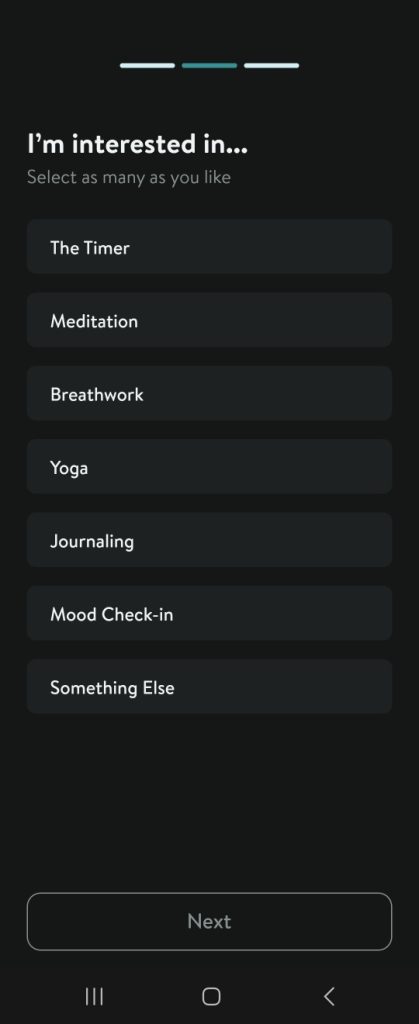
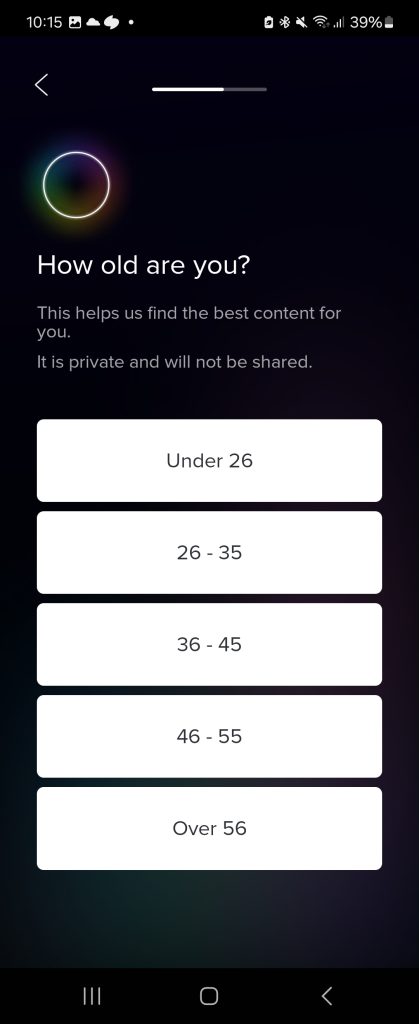
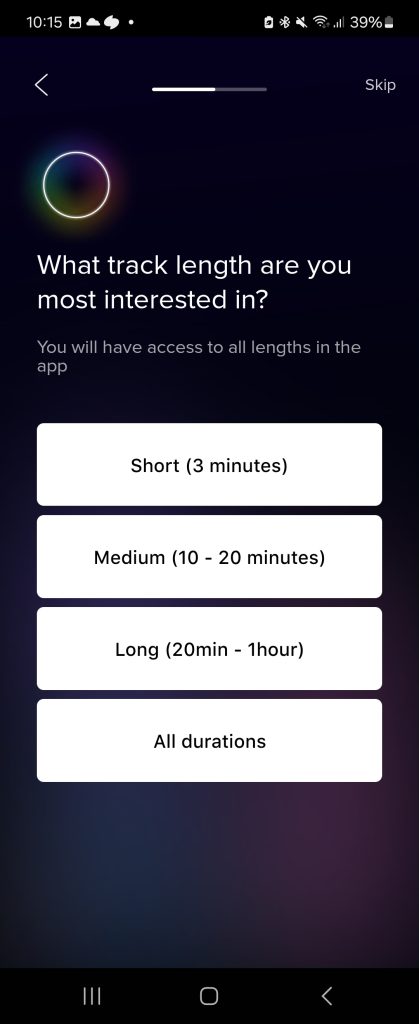
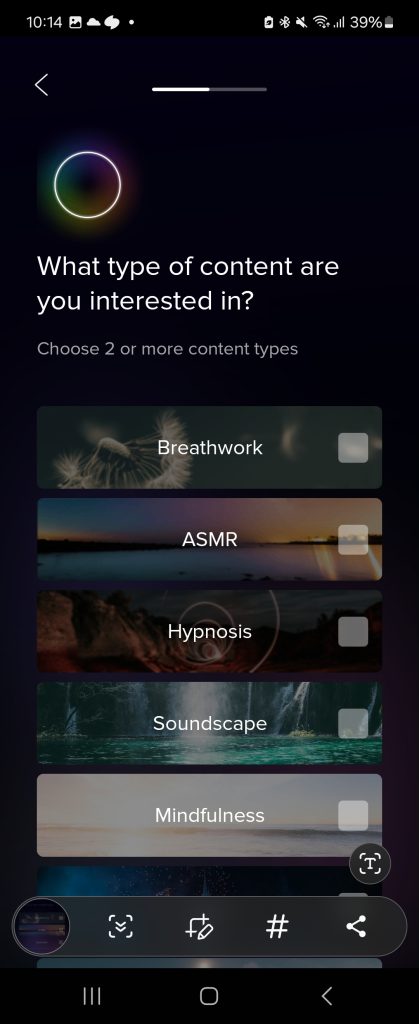
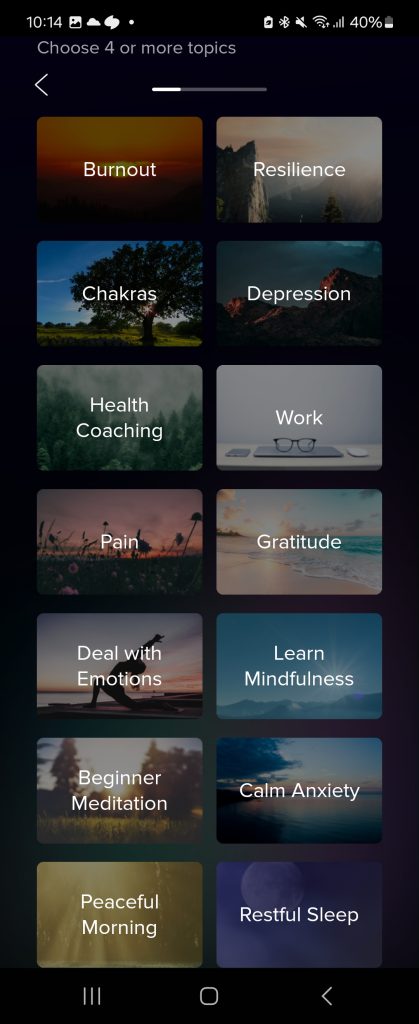
Once you download this app, they ask some general question about myself such as what do I interested in, why I try to use this app. Also set my born year and profiled


InsightTimer

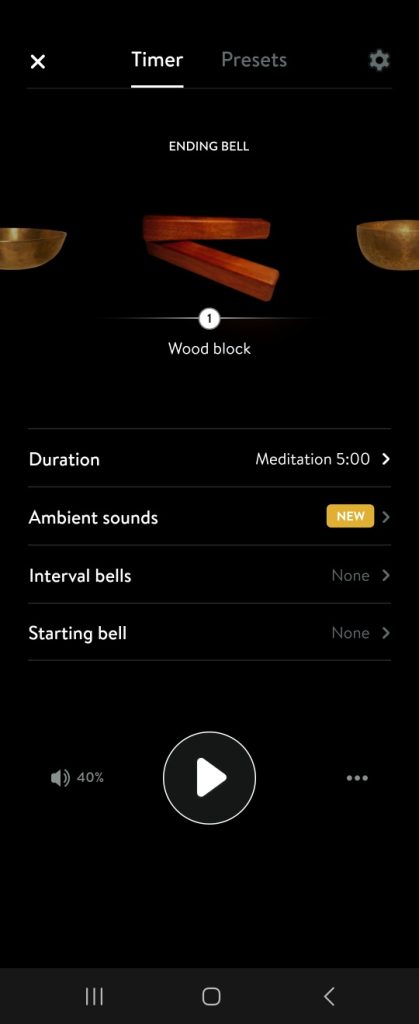
As you can guess from the application name, one of the features of this app is to set the time with various instruments. Because of this feature, I can called it this app for meditation.

Like the below image, set the time with what you like. Surprisingly, it has wooden tools or instruments that are used in the temple or oriental traditional instruments. Especially, if you are a plus member(premium member) they will provide new bells every month. You can set the various bells or, ambient sounds. Even you can set the bell’s interval and start sounds.

Of course, someone think this app has too fancy an alarm feature. It is because alarm and timer feature is really basic, you can find it from the phone easily.

But I believe that when you distinguish some timer from the regluar one it help you to focus on meditation.
If you used a basic timer from your phone, you might feel you got disturbed by this noisy alarm. Even you can’t focus well by worrying about when this alarm will ring. Even it gives you to bad impression of meditation.

Although choosing the bell sounds in this app is a really small feature, but once you used it you found it you totally focus on the meditation well.


InsightTimer

Maybe someone used the short song to set some specific minutes. But it is hard to control the detail time measure such as 1 minutes 1 second or 3 seconds. Also, humans easily get used to some sounds. At first you might be totally in the mediation. Once you used this song several times, instead of focusing on the meditation you start to focus on some pitch of songs or patterns. eventually, instead of meditation you just will be waiting until this song will be finished.

However, once you use various instruments by using this ‘Light Timer’. Every time you will be new to those new sounds. Even some unique sounds stimulate your imagination and cause you to focus on the meditation.

Because of that reason, it makes the user immersed in the meditation.

App Functions

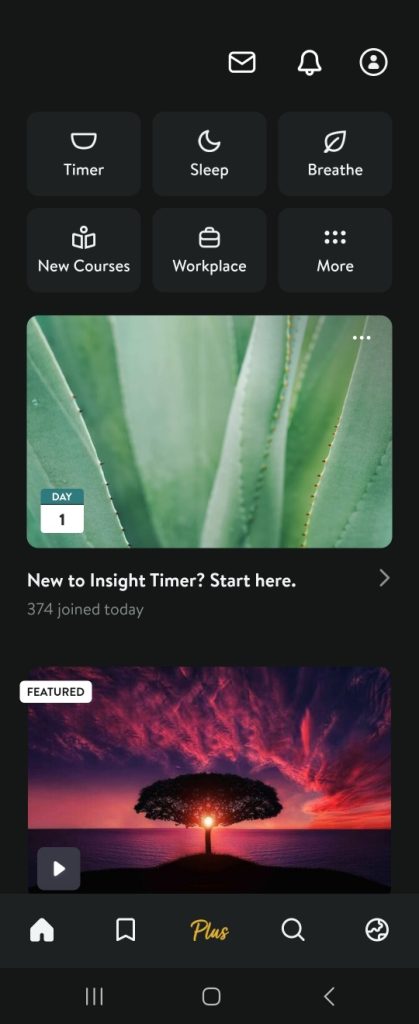
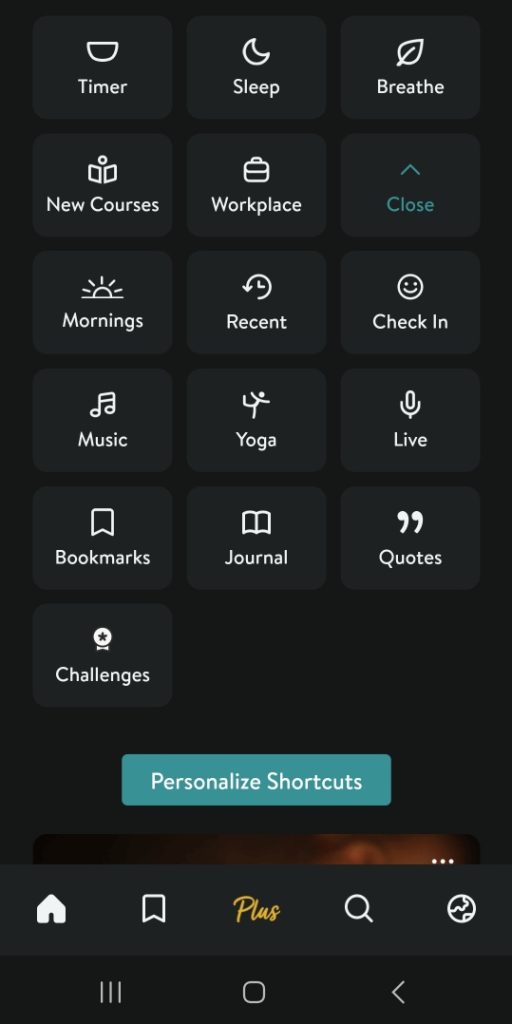
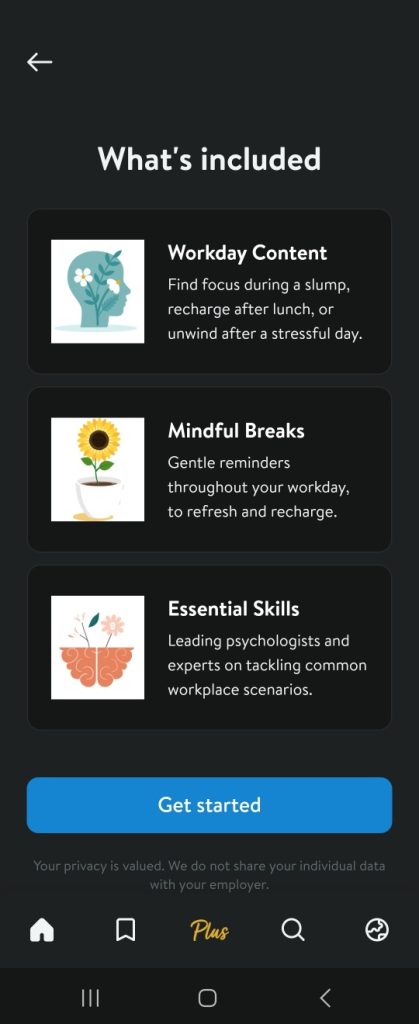
Except this features, It provided various resources for the beginner. On the home tap, it have sleep, breathe, new courses, workplace, morning etc menu.

As you can guess from sleep and breathe, it have some contents to help for relax and breathe.  On the course part, it contains various courses you can easily search by keyword, lecturer , or period of days.


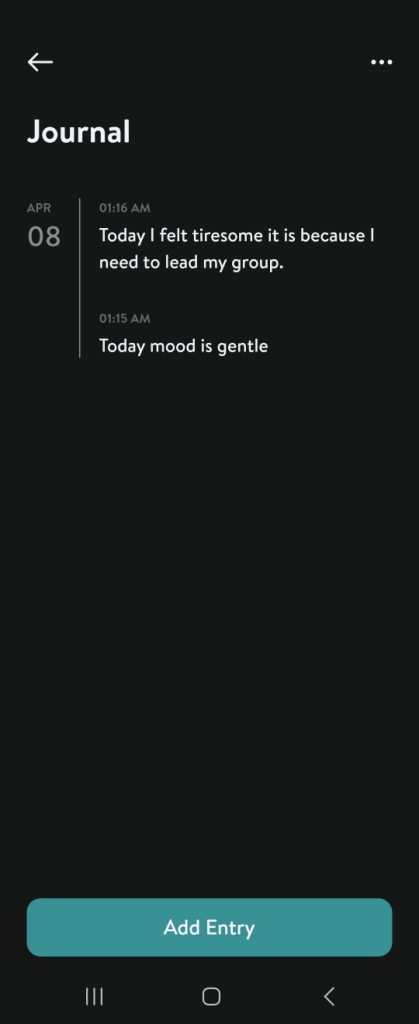
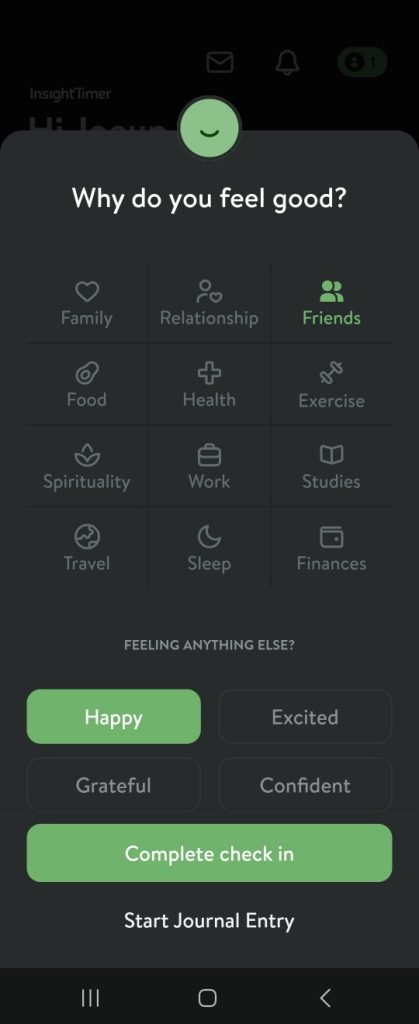
It also has a menu of check-in menu that can fill out my mood today. Once this mood chart is filled I realize who I control my mood and how I fill my day with eventually these days become week and months. It changes me. Except it, it has a journal tap that writes down my thoughts for today. As you know writing a journal is really important by focusing my self. Although you are not writing a journal, this app helps you to make a habit of it by a simple layout format. The good thing is these journals are easily forwarded to other apps.

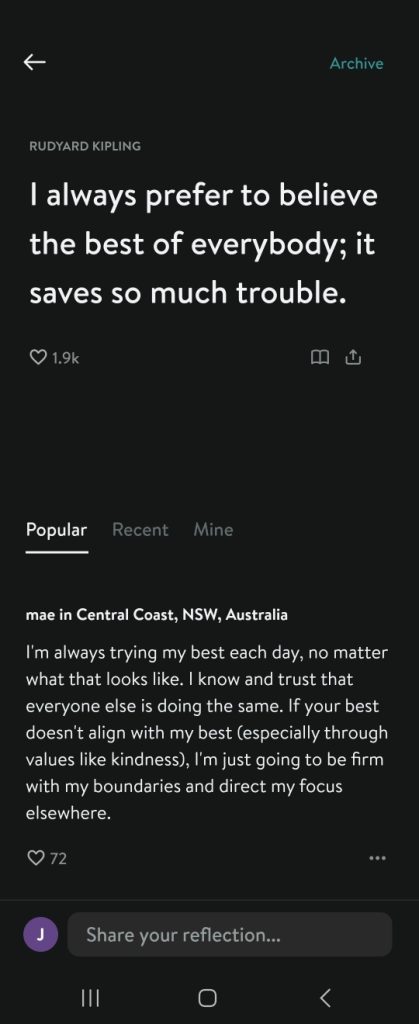
The Journal top is for recording myself, there is Quotes tap that is motivated by others.  Interesting is, that people can comment about this quote and they can share their opinion and get positive energy.


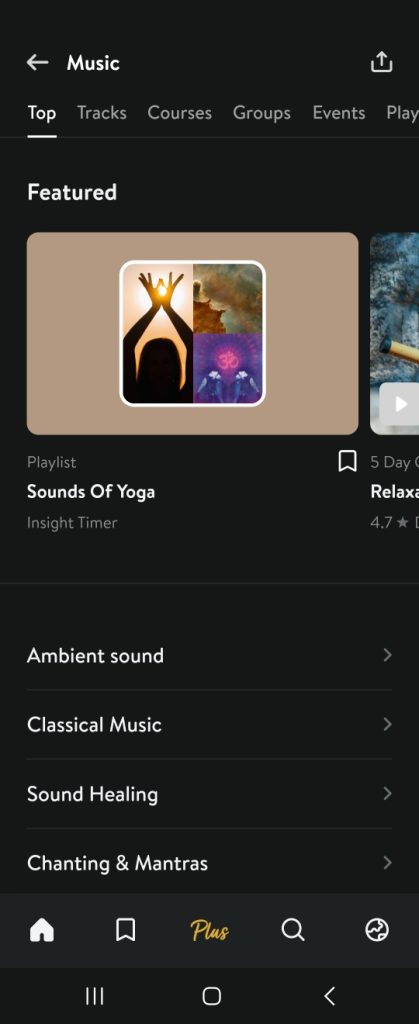
In addition, there are music yoga and live tabs.

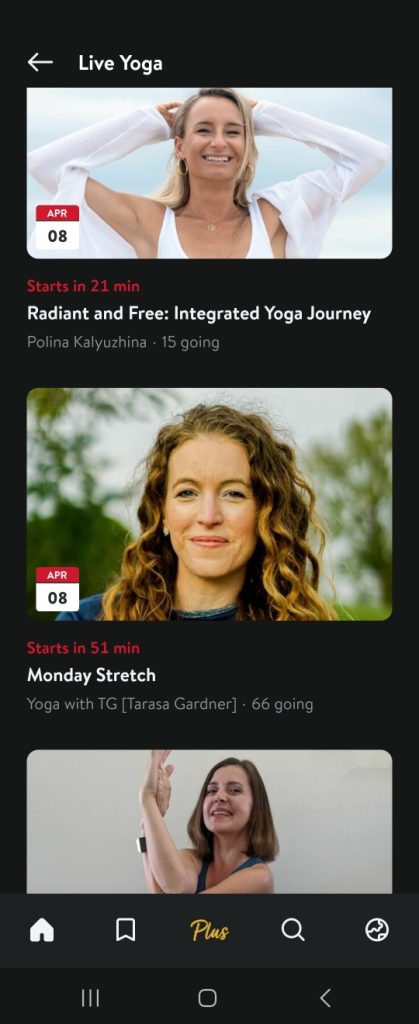
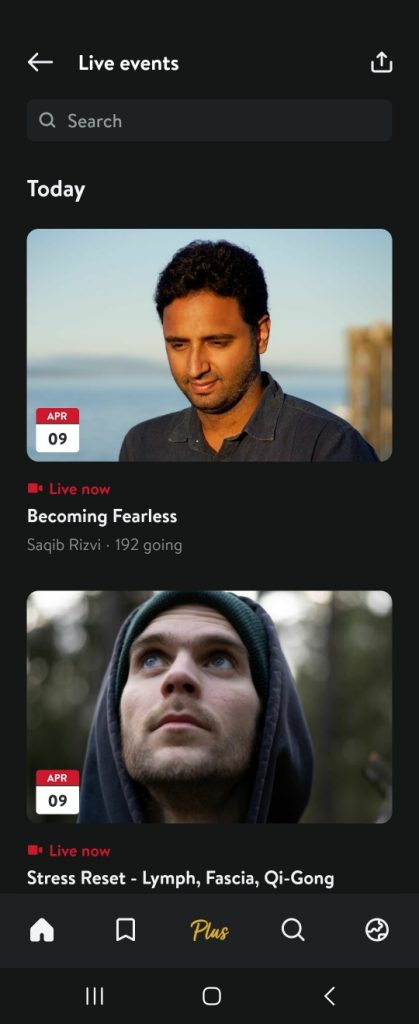
In the music section, you can listen to various genres of music, as well as natural sounds (rain, water), musical instruments, etc. Yoga and Live Tap take place in real time. If you go in on time, you can hear tips on how to do yoga or mindfulness. Since it is live, I can share opinions and do things together with other members, so I think it is effective in forming habits.


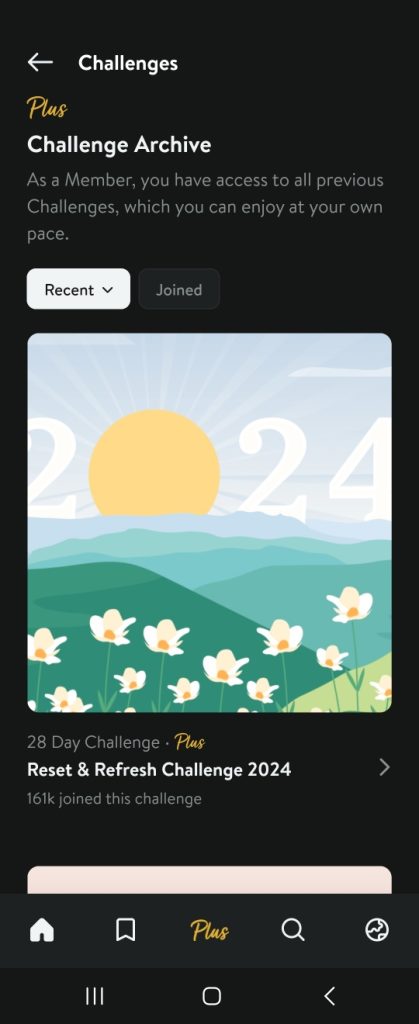
In addition, there are challenge and company-related tabs. For company-related matters, you must authenticate your company email before you can access it. The challenge part is a course where you practice with a certain period of time and topic, such as 7 to 28 days, to form habits. Since it is a challenge, it is structured so that you must listen to all the lectures given each day before you can move on to the next lecture.

As such, this app includes a variety of functions and content. So, I often think I’ll watch it later, but I can’t find the content. There is a bookmark function for such cases. Bookmarking is effective because you can listen to the lecture over and over again at any time.


Insight Timer Review

What I personally liked was that the timer function was powerful, so I thought it would be effective if I used it to practice meditation alone or organize my thoughts. Even for me by using their timer I can focus longer than before.

In addition, I think it is a big advantage that there is a live channel so you can communicate with other people and share your difficulties.

However, the downside is that, as mentioned earlier, there is a lot of content, so it takes a long time to find the content that suits me, and it is a bit cumbersome to have to create and manage a menu in the bookmarks.

Other than that, it’s a good app for meditation overall.


meditation items

Static contemplating


logo


3 basic meditation items for beginners

pexels-prasanth-inturi-1051838


If you just start doing some meditation for now, you can start right now without any items, however, if you are the person who prepares everything before you start a new routine or learning. Let me share 5 items that you can prepare it. 


this article contains affiliate items that I want to recommend to you. When you buy a product through the link, a certain commission is paid to me


Essential Items for meditation beginners (summary)

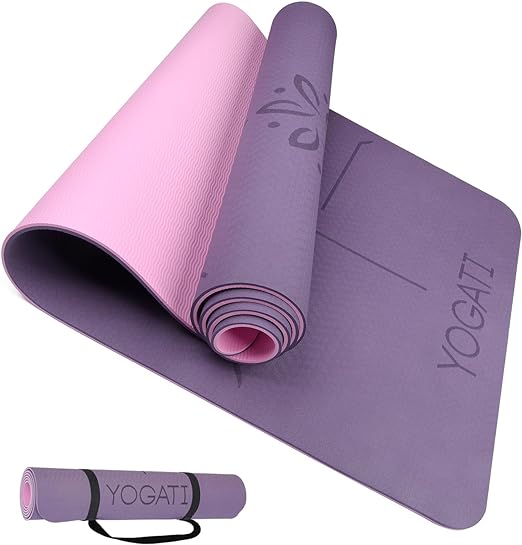
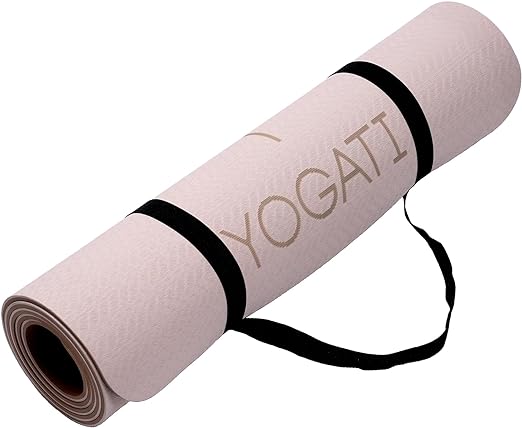
Yoga Mat


yogamat

Feature

1. Thick enough(6mm) for meditation

2. Easy to store with stripe 

3. Safe material and easy to maintain. 

Comfortable clothing


meditation items

Yoga Trouser  (Woman) 

Feature

1. With bandage, comfortable

2. soft material 

3. Practical use 


meditation items

Sweatpants (Man) 

Feature

1. With band and stripe easy to wear

2. easy to maintain materials 

Comfortable clothing


meditation items

Socks

Feature

1. Cotton socks wear for four seasons

2. soft texture with various color 


meditation items

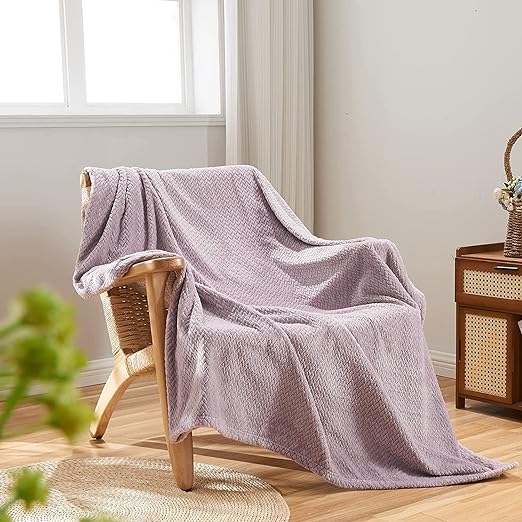
Blanket /shawl 

Feature

1. Okay with machine wash 

2. soft texture with simple design 

1. Yoga mat

As I mentioned in this post, you can start meditation in various ways standing, sitting, and lying down. However, most of the people who trained in meditation for a long time, sit on the floor with a straight spine and stare at the front. For this posture, you need a mat that you can sit comfortably during the meditation. Of course, if you have a cozy and thick carpet, you can use it as an alternative. If you don’t have anything, then you can use a yoga mat. 


meditation items

It is the because Yoga Mat is compact size so you can easily store in your room. Although there are various yoga mats, I believe this is a reasonable product that you can use it.  

Firstly, it is 6mm thickness, and when you use it you feel cushioning so when you sit in the same posture for a long time, you can’t feel pain. 

Its material does not contain any toxic and is easy to maintain for dirty. 

Lastly, it provided a stripe for stores easily. Once you used it just roll it and wrap it with stripe. 

2. Comfortable Clothings

The next item that you need is comfortable clothing that helps you to focus. Of course, you can do meditation with business clothing at the office. Again as I mentioned above, this is people who do it at home. Think about that, when you wear too tight jeans, it is hard to sit on the floor for more than 1 minute. 

The definition of comfortable clothing is really subjective.  Some like sportswear, others like loose clothing. 

This is just a reference you can consider to have. 

Yoga trousers for woman

I want to recommend long pants with spandex.  It is because when you do meditation for some moment, you do not have any movement. That makes your body’s temperature drop it. So, long sleep is better for wearing.

With the spandex, the waist part is band, so you will feel more comfortable with it, this material is really soft too.  Lastly, this trouser is stylish in design, you can wear them daily time such as when going out to meet friends or work. 

Sweatpants for man  

I believe sweatpants is a good option for the male. Especially These pants consist of cotton and spandex, so when you change posture, feel comfortable. Also, it gets less wrinkle than 100% of cotton. Also, the waist part has a band and stripe easy to wear. 

meditation items
meditation items

3. Cloth for make you warm

For meditation for a long time. Keeping the body temperature is important. Once you feel cold or hot, then you can’t focus anymore. For that reason, you should put some clothes nearby. 

Socks. 

Personally, I like to stay barefoot at home, but when I meditate for a few minutes, I start to feel chilly on my feet. When I do the meditation, I wear some thin cotton socks. In the winter time of course I wear thick winter socks too. For now, I want to recommend cotton socks that you can wear for four seasons and easily wash with machine wash. 
Blanket/Shawl 

Sometime, when I stay still, I feel cold, then I drag the blanket and cover with my body. The reason I use blanket or is, it is various size and most of blanket big enough to cover most of my body. Also regular day, just cover it on the bed, and when you need it drag from bed. I want to recommend this product that less hair and easy to maintain with machine wash.

Cotton Blanket 


Polyester Blanket 

meditation items

meditation items


Today I mentioned some items for the meditation, hope this help you to step up the meditation 


logo

© 2024 www.meditationinspirer.com All Rights Reserved. About &  Disclosures

We are a participant in the Amazon Services LLC Associates Program, an affiliate advertising program designed to provide a means for us to earn fees by linking to Amazon.com and affiliated sites.

guided meditation youtube for kids

meditation training 


guided meditation youtube for kids

useful youtube video for meditation training

Today in this post I want to explain more about the method of meditation training for children.

Recently, I talked about the importance of meditation for children and gave tips for training them. If you are still not sure what to start, I want to share some guided meditation YouTube for kids that you can use for training kids.

The Mindfulness Teacher.

As you can guess from the title, this YouTube channel teaches how to meditate for children. This video’s average length is only 5 minutes. The good thing about this channel is once the mindfulness is done, give some simple feedback that children can feel right after mindfulness such as having a headache or feeling hungry and how it happened. I believe this empathic statement makes children feel relieved and comfortable doing meditation.

mindfulness of body parts

As I mentioned in the previous post, trying to focus on breathing and body parts is an easy way to let kids to familiar with it. I want to recommend some content from this channel. Firstly I want to recommend try the X-ray video, it makes kids to think they are taking the X-ray from foot to head. By doing this activity, kids pay attention to each of their body parts’ movements and their feelings too.

guided meditation youtube

mindfulness of breathing

Regarding breathing contents, it has various contents from basic breathing to different methods of breathing. I found a content called Rainbow Relaxation that kids can feel fun. Firstly, let the kid to imagine their hands are brushes for drawing color ring. With breathing, the kid can draw the ring and change the ring too. Although it is short content, really useful to kids get familiar with it. This channel also provided various breathing contents such as rectangle breathing, circle breathing and star breathing. Although it is a really short video under 1 minute.  Once you turn on it, kids will be fascinated with this video with colorful and straightforward content. Once they practice several times, they naturally learn how to deep breath for mindfulness.

guided meditation youtube

Timer

Lastly, this channel also has a countdown timer with relaxing pictures and background songs. I believe parents or teachers will use count for counting meditation duration of about under 1 minute. Some count with a clock’s secondhand or phone alarm. But as you know children are not comfortable with silence. Maybe for some kids, that moment is really boring to die. For the kids, I believe using some video countdown will solve this problem. As you glance, it is a really simple video with a timer, calm an image and relaxing music. Once you use this content for training kids’ meditation, it will helpful to kids more attention on meditation

Various

⭐⭐⭐⭐⭐

Length of video

under 5 minutes

Age for video

3~13 age who never tried mindfulness training.

New Horizon – Meditation & Sleep Stories 

If your children get familiar with meditation and breathing, also they can focus for more than 5 minutes, this channel can be helpful for your children. Even the children can’t sleep at night time, this content can be useful.

 mindfulness of thoughts

This content has ‘Guided meditation for children’ and ‘sleep meditation for Kids.’ Firstly guided meditation is more focused on breathing with imaginary narration with different themes. For example, the Garden theme makes children stay in the forest by doing this meditation, children will take off their anxiety and worry. At the end of the video about 1-2 minutes, the narrator reminds kids to return to real life by focusing on each of body part again. It helps kid not to doze during the meditation.

Another content is sleep meditation for children, which is similar to “Guidant Meditation for Children,” but has a much longer average running time of 30 minutes. There are also various content, including the Wizarding Kingdom and the Animal World(Sloth). Because it’s long content, the details of the explanation stimulate children’s imagination well. But since it focuses on sleep, it initially focuses on detailed narration, and after about 10 minutes, it repeats that the narration is a safe place to sleep right now. So, in the end, it’s a video that encourages children to fall asleep naturally.

This video stimulates kids’ imagination, if kids like to imagine, this video can help them to step into the meditation training and help with insomnia Since this video is quite long, before kids start the meditation, let them posture naturally such as lying down on the bed or sit in a chair.

guided meditation youtube for kids2

Various

⭐⭐⭐⭐

Length of video

10~30 minutes

Age for video

8~13 age who get familiar with mindfulness training

KIDZEN – Music For Kids

The last channel that I want to share is Music for Kids. Rather than meditating, I believe this channel can help children who are accustomed to stimuli, such as cell phones or electronic devices, to calm them down. Rather than asking children to listen with their eyes closed as if meditating, play this song when they are doing free activities, such as drawing or playing. For instance, below thumb image from Relaxing Music For Children – Be Calm and Focused (cute animals) | 3 Hours Extended Mix.  As you can hear by clicking on the link, it’s a really peaceful song. I even listened to it when I was searching through the material for this post, and the calm song allowed me to fully immerse myself. Especially, I believe for the kids, this song will help them feel more emotionally stable. Listening to such a calm song many times makes them more accustomed to being still and quiet, and meditation training from then on is effective.

guided meditation youtube for kids

Various

⭐⭐⭐

Length of video

3~ 12 hours

Age for video

3~13 age who never tried mindfulness training.

In conclusion,

Today I share some useful youtube video that you can use for training children meditation. Hope this contents helpful for you!

Read More

8_mindfulness_tips
A variety of contemplating methodsThe Origin of meditation

logo

© 2024 www.meditationinspirer.com All Rights Reserved. About &  Disclosures

We are a participant in the Amazon Services LLC Associates Program, an affiliate advertising program designed to provide a means for us to earn fees by linking to Amazon.com and affiliated sites.

children’s meditation

children's meditation


Important of Children’s Meditation

children's meditation

Children’s Meditation

Have you ever heard about children’s meditation?  You might wonder why children need it.

From an early age, children’s brains become sensitive to stimuli as electronic devices are exposed to increased exposure. (It depends on the parents, some give phones from 0~1 years old, while others expose  devices from 5 years old)   Of course, it has the advantage of activating the brain by being exposed to electronic devices early. However, the stimulated brain can also lead to difficulties in personality formation.  For example, if a child uses electronic devices such as phones, PCs, and Tables for too long(more than 2 hours). It can lead to a lack of self-regulation and concentration. This is because, as a child gets used to fast and strong stimuli, the child easily loses interest without them. In addition, if the child gets too used to electronic devices, the child can have difficulty making relationships with others.

children's meditation

How to Reduce digital device exposure for children?

So, how can children be less affected by devices? Of course, smart parents adjust the time on their electronic devices or delay access to them so that they are less affected. However, if children have already started using electronic devices, it is harder than you think to reduce using devices time. Then, an alternative to developing their emotions and self-control is meditation and mindfulness.  As you know, meditation really helps to improve the brain

Here is an interesting experiment. In 2016, there was a study related to children’s meditation.  In this study, the researcher conducted a separate experiment on 7-8-year-old healthy children, with and without meditation for eight weeks. The group who meditated reduced the level of anxiety, impulse, and oppositional. Furthermore, cognitive problems and hyperactivity figures also improved. Based on this result, children’s meditation and mindfulness training can help for ADHD symptoms. Not only that, there are positive effects on children. For the children who conducted mindfulness, their social skills improved, and socializing with friends, meta-cognition also improved.

children's meditation

When is the right age to starting meditation?

Now, based on the research, mindfulness is really helpful for children then, at what age should I start meditating?

Of course, the degree of development varies depending on the children’s environment and physical characteristics, but you can do it from the age of six.

This is because from this period, it is a time to understand personal feelings, to recognize others’ feelings, and to gradually establish relationships with others. Especially from this time on, my vocabulary has improved and I start to get interested in various vocabulary and descriptions. So if they develop how to do mindfulness by using words or tools, their imagination and vocabulary will improve even more. Furthermore, their self-regulation and attention will increase. At this time, rather than forcing a child to sit down, I should proceed this training method comfortably through play so that children do not get bored and enjoy it. Especially, it is also a way to keep the time short at first and then increase the time later.

children's meditation

How to form meditation habits for children?

In the aforementioned study of child meditation and mindfulness, it conducted similarly.

The experiment, which lasted for eight weeks, was conducted for three days, nine minutes each in the first week, and increased it to three times a week, 12 minutes each in the second week, 15 minutes in the third week, and 18 minutes in the fourth week, before increasing it to 30 minutes in the eighth week. If children start to enjoy meditation once, and there is no pressure to meditate, I think this is the way to increase their time. Also, meditation is a really good habit in life, so doing 10 minutes three days a week rather than doing 30 minutes once a week helps form habits, and it is easy for children to adapt.

children's meditation

In Short

To sum up, These days, the keywords meditation and self-mindfulness are hot topics. As technology advances day by day, our lives have become richer and more convenient. However, there are many times when our mind and heart easily get lost in something else and we lose ourselves. I think it is especially important to teach children these days, who are exposed to electronic devices from a young age, how to control themselves and meet themselves from an early age.

Read More

Companies Encourage employee Meditation For Well-being

Useful Meditation app 

 reference from

 Mindfulness-Oriented Meditation for Primary School Children: Effects on Attention and Psychological Well-Being 

logo

© 2024 www.meditationinspirer.com All Rights Reserved. About &  Disclosures

We are a participant in the Amazon Services LLC Associates Program, an affiliate advertising program designed to provide a means for us to earn fees by linking to Amazon.com and affiliated sites.

3 factors you need to care for Children’s Meditation Training.

meditation training 


3 factor to careing for Children’s Meditation Training.

meditation training 

Last time I posted about the importance of children’s meditation. I talked about why it is needed for children, and when is the right age to start meditation training. How to form the meditation habit. It sounds really right and great to make these habits, but it is not easy to let children stay in a certain posture for a while.

Today in this post I want to explain more about the method of meditation training for children.

meditation training 

Three factors for children’s meditation training

There was a children’s meditation experiment in 2016 at an Italian primary school.  When they practice meditation with children, they are focused on three things: ‘mindfulness of breathing’, ‘mindfulness of body parts’, and ‘mindfulness of thoughts’. Since children can’t concentrate for a long time and by the time the training time is longer, they easily lose interest. By conducting this meditation training with these three factors, children could focus on the meditation at the end of the period, and their meditation time became longer.

1. Mindfulness of Breathing

Every human being knows how to breathe naturally, but ironically, this is one of the important factors in meditation training. It is because by inhaling and exhaling you can focus on you and it brings you calm down. So, breathing is the gate of mediation. Although it is an important process for meditation, at the same time it makes children feel bored since these are natural things and tedious stuff.

In the research, they used various tools to let them feel fun. For example, put a small object such as a pen or pencil on the belly. It makes children pay attention to their bellies. When they inhale their breath, their stomachs are bulging. Another way is to put their hand on their stomach and feel the movement of the stomach or put my hand on a classmate’s belly to feel it. Checking their stomachs lets children to interested in and have meditation habits. Other fun method is let children think the meaning of in and out when they breathe. Then they will more focus circulate of air in and out through the nose.

Another method is using children’s imagination. When the trainer guides the children that there is a dwarf near the nostril and makes them think about how this man will move when the children breathe. These instructions make them to feel fun in tedious meditation training

meditation training 

2. mindfulness of body parts

Once children warm up with statics breathing training, the next step is dynamic training with the body. In this chapter, make children pay attention to their bodies. Using the body, also makes children feel fun in meditation training.

In the research, they used an interesting method. it is called ‘Raisins meditation’ Give several raisins to children’s hands and then let them smell, watch, and touch it. Lastly, let them eat and taste it. This meditation stimulates the four senses (sight, taste, touch, smell). Another method is touching other classmate’s hands and feeling of skin, nails and temperature of hands. Furthermore touching the different parts of the face.
By touching body parts, it stimulate children brain.

There is more dynamic meditation training method. Let children walk slowly and try to feel how every part of the body part is working, such as when they step the foot on the floor, which part of the footstep first, and which muscle is used.
Made children run or jump for a short time and then let them focus on their heartbeat or panting sounds. But this training should be done end of the training, if not they keep wanting to jump and run which is hard to control.

meditation training 

3. mindfulness of thoughts

As you know children have a great imagination, and by using this children can enjoy meditation training. In the experiment, they used these methods. Let children imagine they were clouds in the sky and then, write their main thoughts on paper such as what they are in their minds, or come up with something by looking at the cloud. Once it is done, make children represent their feelings using their bodies. It can be the movement of clouds by crawling or walking.

Another method is, to try to feel their emotion or main thoughts of the moment. Also, try to think about how this feeling or thing comes from and how it disappears.
Or look at family, friends, and classmates’ eyes and try to understand what they think and then, try to transmit wishes (peace, happiness, health) mentally.

Another is, to imagine they are the animals and strolling in the forest. The children will draw animal postures and try to behave like animals. Another imagination is, lying down on the floor and making them imagine they were a paper-facing scan in the copy machine. Then children will represent it by rolling their bodies on the floor.

In particular, by encouraging children to imagine, they can strengthen their imagination.

meditation training 

In Short

I believe these three factors(mindfulness of breathing, mindfulness of body parts, and mindfulness of thoughts) will help children to train in meditation fun. You don’t need to try every three factors, depending on your situation, you can choose some factors. The important thing is, to make children feel fun in meditation training by using your games and imagination to get used to meditation.

Although these are good methods to apply to children, if your children start first, then try under 10 minutes first. After that, you can extend the 2~3 minutes per day. About 1 month later, children can focus on meditation for more than 30 minutes.

Doing it often for a short time is more effective in making habits than doing it sometimes for a long time. For example, doing 10 minutes 3 times a week is better than 30 minutes of meditation once a week.

Read More

Companies Encourage employee Meditation For Well-being

Useful Meditation app 

Meditation to help improve the brain 

What is Meditation and Mindfulness? 

 reference from

 Mindfulness-Oriented Meditation for Primary School Children: Effects on Attention and Psychological Well-Being 

logo

© 2024 www.meditationinspirer.com All Rights Reserved. About &  Disclosures

We are a participant in the Amazon Services LLC Associates Program, an affiliate advertising program designed to provide a means for us to earn fees by linking to Amazon.com and affiliated sites.

Application for meditation

useful youtube video for meditation training


Recommended apps for meditation habits

dynamic contemplating

Application for meditation habits

Today meditation has a spotlight whole over the countries because of plenty of beneficial of it. Even some companies started meditation sessions at the workplace for employees and mindfulness classes also opened at the sports centers too. If you are interested in this class but, you don’t have enough time or there is no class nearby, then you can try to use the meditation application. In this post, let me introduce some applications of meditation that I used for a few days.

Application for meditation: Aura

The first application that I want to share is Aura. 

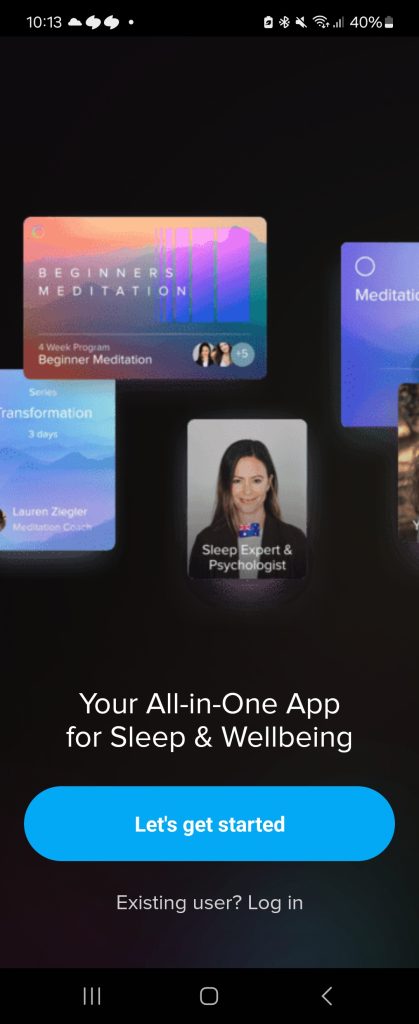
This app is a paid app and can be used by paying $11.99 per month or $59.99 per year. When you first sign up, you can explore the app for free for 7 days. If you look at the landing page of this app (at the very beginning), it says all in one. So, it is quite useful as it provides various content other than meditation.

app for meditation Aura

Personalize Page

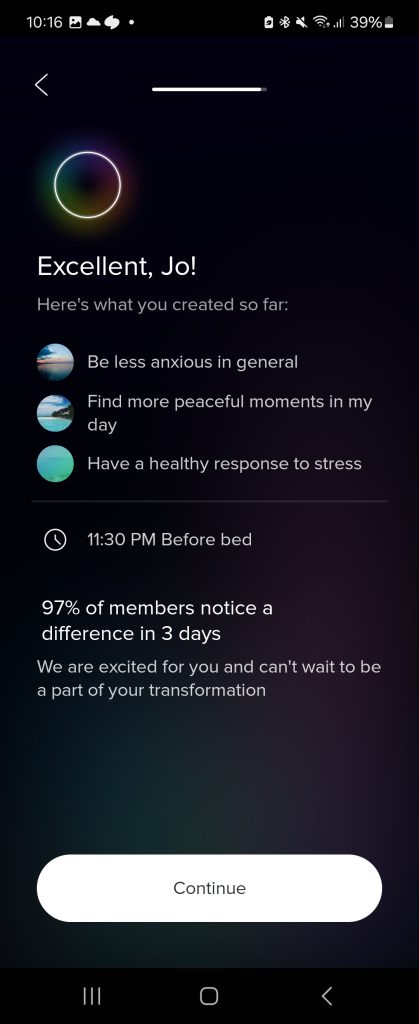
When you first install the app, it is complicated because you have to enter quite a lot of information.

You need to check your age, the time you want to use, the nationality of the coach you are taking classes from, and the field you are interested in.

Although it is a bit cumbersome, it has the advantage of allowing you to quickly find the information that is right for you by recommending content to suit your tastes based on the data.

app for meditation Aura

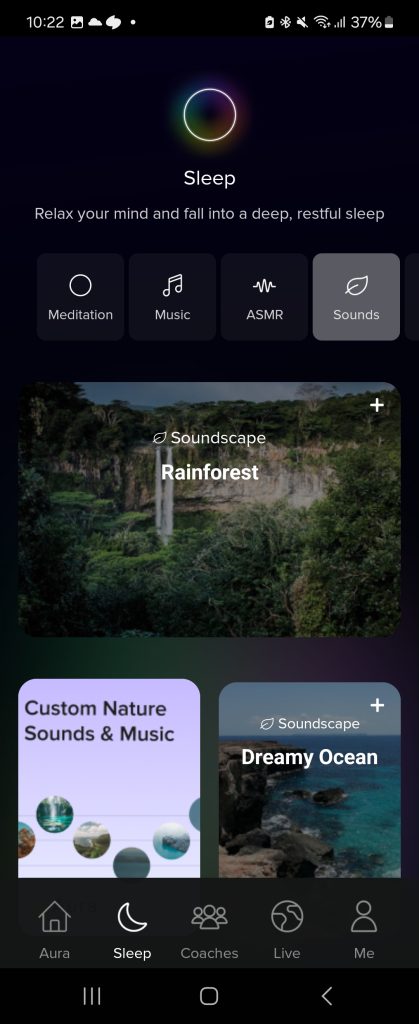
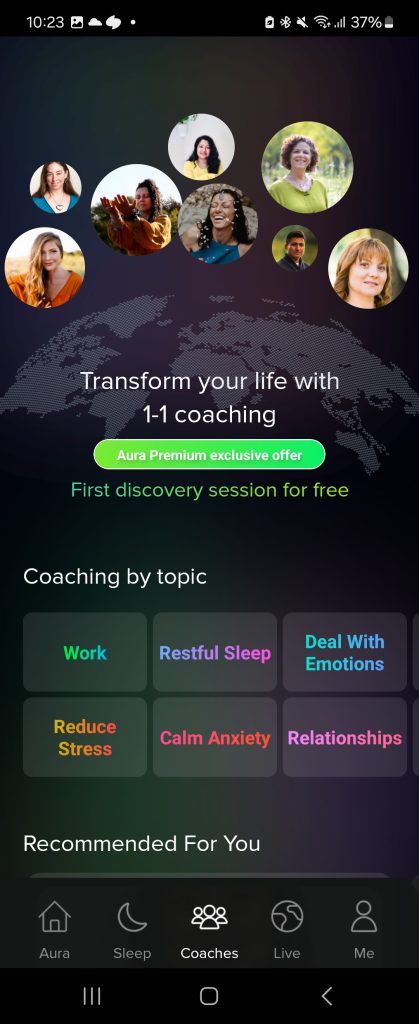
You can also select the content you are interested in, and it is divided into 11 types of content, including mindfulness, ASMR, prayer, and work wellness. You can also choose a topic based on when you want to use the app. For example, if you need advice and coaching on health management, health coaching,

If you need to manage stress at work, then check on ‘Work’

When you are depressed, you can choose the ones that suit you by selecting ‘Depression’. In particular, the Aura app also has a separate session called Beginner Meditation, which will be helpful for those who are starting to meditate for the first time and do not know how to form habits, starting with breathing.

app for meditation Aura

App Functions

After basic settings, there are 5 tabs at the bottom.

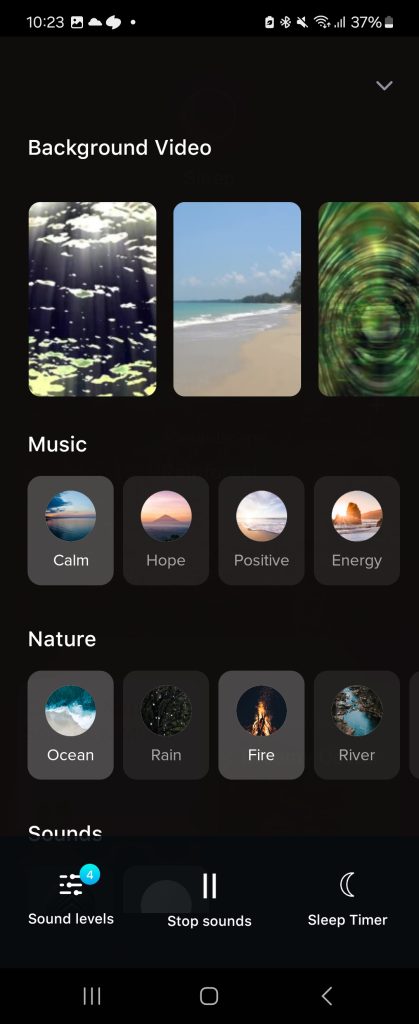
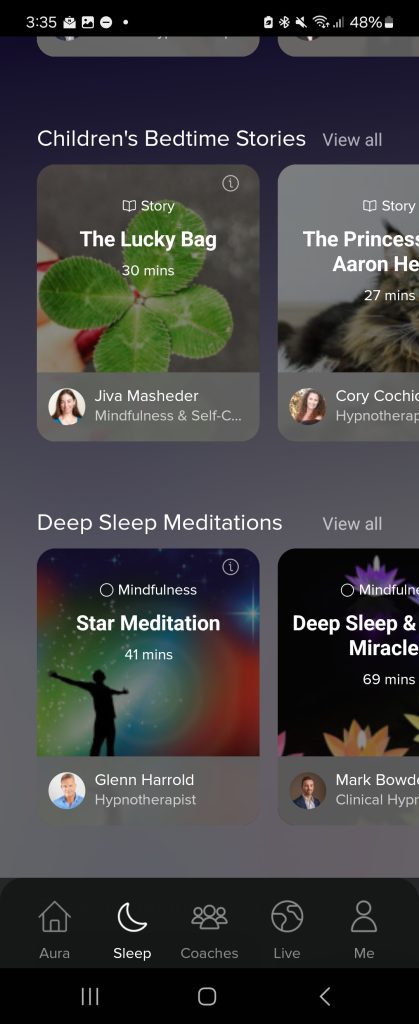
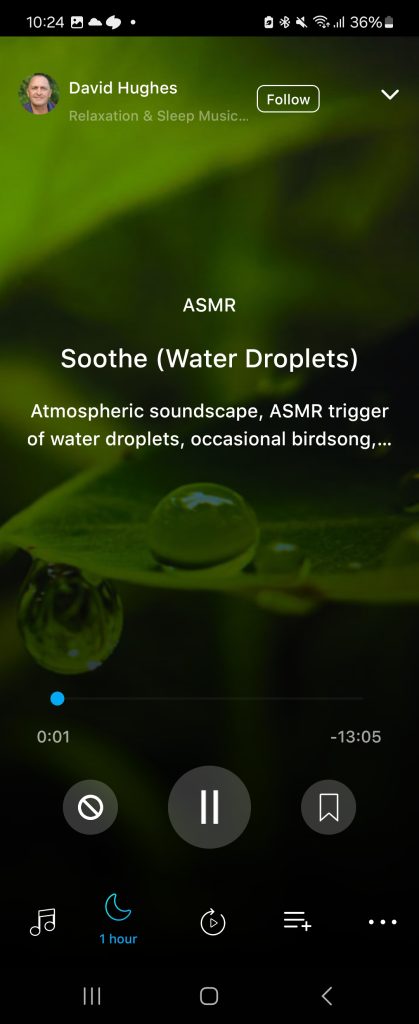
Sleep tap includes sounds, ASMR, music, stories, etc. that help you fall asleep. You can set the duration of the time, this content will continue until you fell asleep. Additionally, there are even stories that are good for children to listen to before going to bed. If your child does not sleep well, it would be a good idea to help them develop sleeping habits by listening to this content together.

app for meditation Aura
meditation app Aura

Coaching is conducted 1:1, and after choosing an instructor that suits you, you can learn about your attitude toward life and stress management methods by taking classes. However, for this part, you must pay an additional amount to the instructor. This is not a free service.

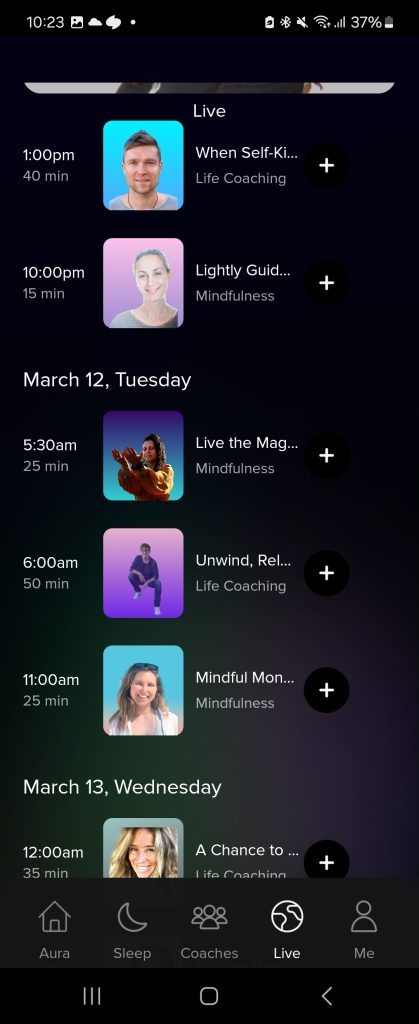
The Live tab has the advantage of allowing you to actually listen to teachers’ coaching, so if you find a coach that suits you, you can continue taking their classes over and over again.


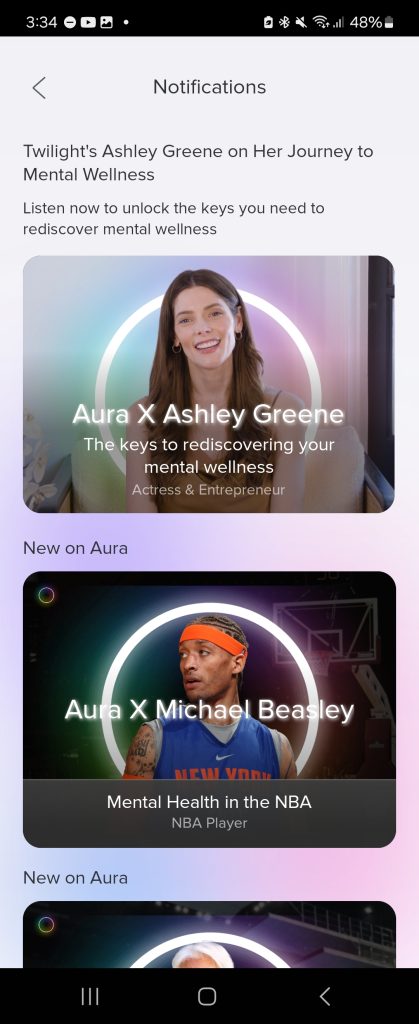
Aura’s home page recommends sessions, classes, and podcasts worth listening to today. When you click the mail icon on the right, the notifications item appears, where you can check the features session. In particular, you can listen to the health management know-how of famous celebrities, and by listening, you can learn about how they managed their mental health to get to that point.

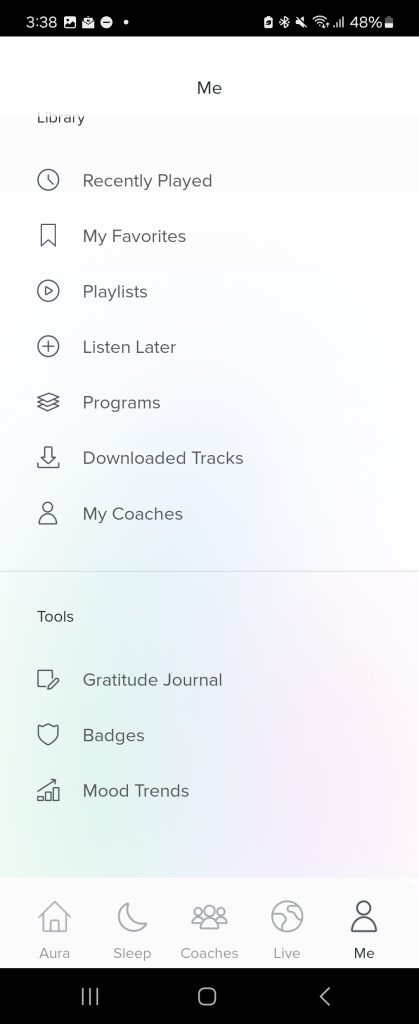
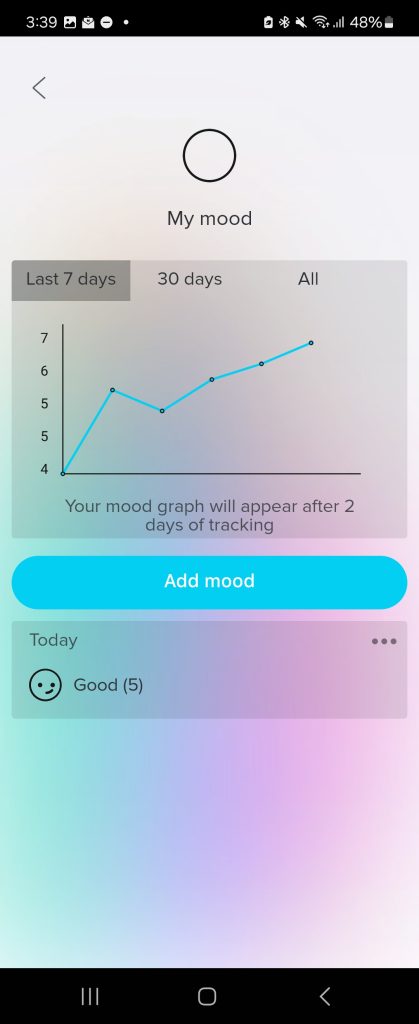
Lastly, on the me page, you can check the content you recently listened to or saved. There is also a section at the bottom where you can check your mood called My mood. You can check how your mood is changing while using the app.


Aura Review

I used this Aura app for 5 days so far, I really enjoy this app. It pushes an alert nudge and reminds me to start the mindfulness course. It is really helpful for my insomnia. Usually, I can’t sleep well by thinking something has not happened yet, however, once I start listening to the ASMR, or calm music, I stop thinking, and makes me relax too.

Also, once in a while, I took a celebrity session from New on Aura. That is also really helpful to how to maintain my mental health.

Application for meditation: Headspace

This Headspace app focuses on well-being with mindfulness. You have to pay $12.99 for one month or $69.99 for one year, and you can use it for free for 14 days.

I especially like the app because of its cute UI, and I have been consistently sending meditations where I can enjoy happy ticks and other features. After initially installing, you will almost see a screen like this, and you can turn it on by pushing it to start with pairing, filling, and breathing.

app for meditation headspace

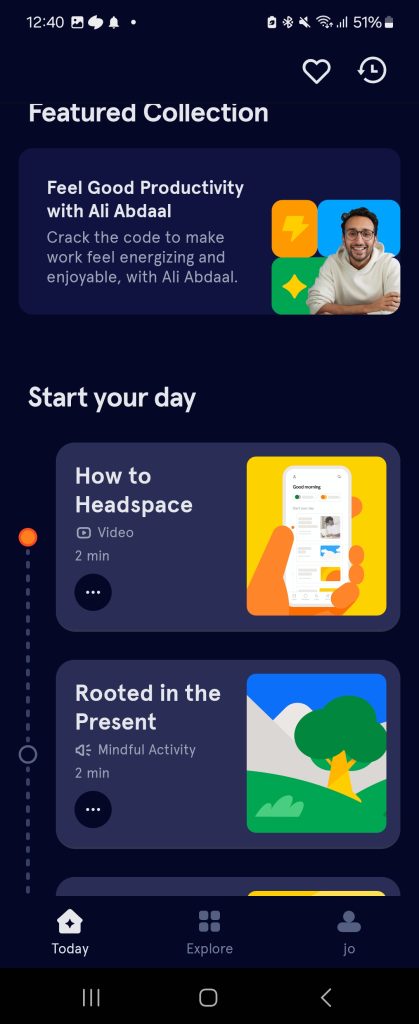
It consists of three tabs. First, the Today tab introduces content that can be done in the morning, afternoon, and evening, and can be compared in your own time.

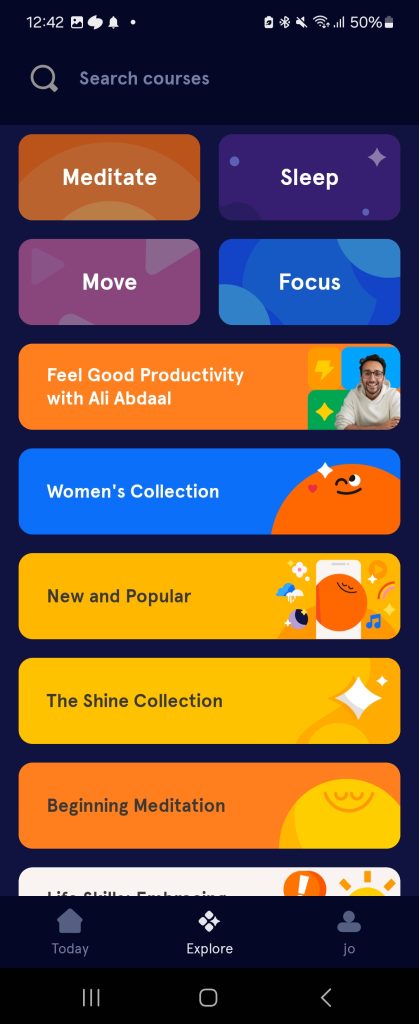
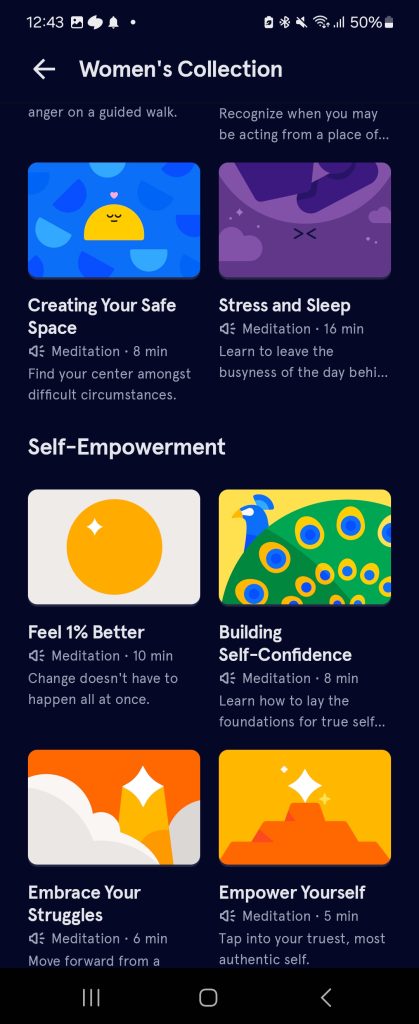
The tab consists of various contents based on keywords. Surprisingly, there are keywords with interesting topics such as Women’s collection and Beginner Meditation, so I will continue to use the app for a long time. Also, there is Mindful Money, and there are items introduced on how to manage and save money. Also, most videos are about 3 to 5 minutes long, so you can watch them without any pressure.


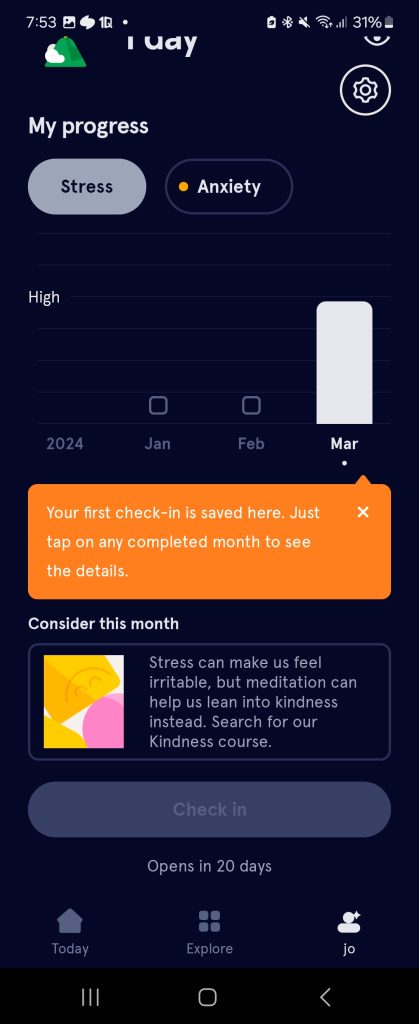
The My Page section allowed me to keep a record of the videos I had watched. In the part where I ask questions, I am trying to analyze my mind’s tasks so that I can see if my stress is a big deal.


Headspace Review

This Headspace app is a simple and really cute design with practical content. I believe this is a really good app for the beginner of meditation and mindfulness

So far, I just reviewed the Application for meditation (Aura, Headspace). I will use more apps and share it soon!

logo

© 2024 www.meditationinspirer.com All Rights Reserved. About &  Disclosures

We are a participant in the Amazon Services LLC Associates Program, an affiliate advertising program designed to provide a means for us to earn fees by linking to Amazon.com and affiliated sites.

Companies encourage employee meditation

sitting contemplating


logo


Companies Encourage employee Meditation For Well-being

encourage employee meditation

Big companies encourage employee meditation for well-being

The company is the place where you spend most time of your day. at the same time, it is the place to get stressed easily, depending on my mood. Some employees spend too much energy on their mental condition, they even cannot concentrate on their work as well as relationships between colleagues. In the past, companies were not very worried or concerned about personal condition, but now the perceptions of big companies are changing. As companies begin to recognize that the efficiency of work varies depending on the conditions and well-being of employees, some large companies encourage employee meditation by providing training and meditation rooms.

encourage employee meditation

Apple

As is well known, Steve Jobs, the president of Apple, also knew about the importance of meditation before then. He is known to have meditated to help himself face problems and manage stress. He wanted to bring it to his employees and share its effects, so he allowed about half an hour of meditation at the office every day and offered meditation and yoga classes.

Google

It is famous for creating clubs within Google to encourage employees to participate in various activities outside their duties. However, a few years ago, a software developer organized a program called “Search Inside Yourself” to review and care for employees’ minds. At that time, the employee had strong positive feedback on this activity, as they learned how to relieve their stress and keep their minds well-thought-out, and they have been continuing the program until now. Especially, as the program develops every year, it teaches them various ways to meditate and find answers by asking these questions ‘What do I like? ‘, ‘When I feel happy?’ 

encourage employee meditation

General Mills

It is also a company that encourages employees to work happily and healthily at the company. A few years ago, its executives introduced a mindfulness program to encourage employees to have a healthy mindset. Furthermore, the program has also increased fellowship toward colleagues.

Since then, it has expanded and become more systematic. Now, it has become a seven-week program. Through this program, employees can learn how to manage their stress and how to behave when working with other colleagues.

Meta (Facebook)

These days, Meta, which values creativity and pursues various innovations with new technologies, is particularly putting effort into enhancing the company’s culture. This is because when an employee is stressed or unstable, the employee affects the company’s culture. So Facebook CEO Mark Zuckerberg has been known for several years for meditation classes that allow employees to find peace of mind and further enhance happiness and creativity, as well as informally meeting to strengthen the company’s culture.

encourage employee meditation

Sony

Surprisingly, the company recognized the importance of a healthy mind early on and began programs for the mental and life health of its employees in 1992. So, it offers programs to employees of subsidiaries as well as domestic partners so that they can have fun working for their company. Sony encourages employee meditation and some branches are offering fitness centers for employees and a cafe for health too.

Intel 

Intel is also currently introducing mindful and meditation classes. Interestingly, it was initially a small-scale activity led by employees. However, it turned out over time that employees participated and gave a lot of positive feedback and were able to work more effectively. Especially, one employee who worked at the software department was able to come up with the errors I encountered when working on a computer faster. In addition, after discovering that the reliability and intimacy of employees have increased, the company has adopted this program and fully supports it until now. 

encourage employee meditation

Goldman Sachs  

Goldman Sachs, a company that deals with and analyzes numbers, also already knew the importance of mindfulness. Notably, Sarah Wood, who introduced this program, created a meditation program that was the driving force behind her commitment to work and spread it to her colleagues. She said that meditation training allows her to find happiness in her daily life. Meditation classes have continued steadily due to her constant efforts and Goldman Sachs interest in improving employee’s wellbeing. 

Nike 

The combination of active brand image and meditation is hard to imagine, but Nike has already prepared a space for its employees to relax. Here, the employees can take a nap and have a tranquil time, such as praying and meditating. Nike seems to have already realized that while physical health and activities through exercise are important, the mind is also healthy when the mind is healthy. Nike already knows the importance of mindfulness, especially as their slogan, ‘Just do it’, is mind-free and can act when it is positive. That’s why Nike encourages its employees to do mindfulness whenever they want. 

As you can see above 8 global companies, realize the importance of their employees’ mental conditions in advance and provide various programs. In this way, these global companies continue to move forward thanks to their sincere heart and interest in their employees.

 Reference from

workplace-culture

What Companies Use Mindfulness Programs for Employees?

How Businesses Use Mindfulness and Meditation for Productivity and Health

6 Companies Using Meditation for a Productive and Happier Workplace

logo

© 2024 www.meditationinspirer.com All Rights Reserved. About &  Disclosures

We are a participant in the Amazon Services LLC Associates Program, an affiliate advertising program designed to provide a means for us to earn fees by linking to Amazon.com and affiliated sites.